The Offering Is Sacred. It Is Not a Complete Financial Strategy.
Churches should continue teaching biblical generosity, but growing community needs, changing participation patterns, aging facilities, and economic uncertainty require leaders to think beyond one weekly revenue stream.
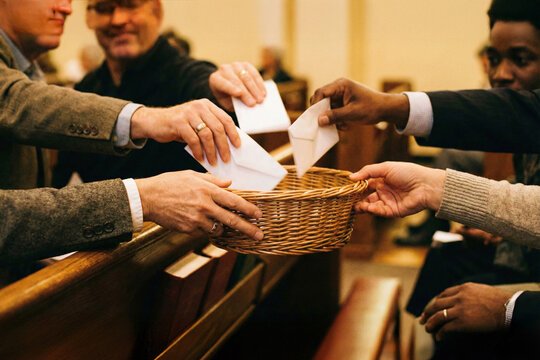
The church received a generous offering on Sunday. The HVAC system failed on Monday. The facilities director put a repair estimate on the pastor's desk on Tuesday. By Wednesday, the finance committee was meeting to discuss which budget line could absorb the cost without triggering a congregational conversation about money — a conversation that, if experience was any guide, would make the following Sunday uncomfortable for everyone.
This pattern is familiar to nearly every church leader who has held the role long enough to see the roof age, the neighborhood change, and the giving patterns of the next generation diverge from those of the generation that built the building. The offering is not failing. In many churches, it is still growing. But it is also, increasingly, the only plan. And a strategy built on one revenue stream — one that depends entirely on the voluntary generosity of an aging donor base, in a culture where religious participation is declining, in an economy where discretionary income is squeezed — is not a strategy. It is a hope.
"The plans of the diligent lead to profit as surely as haste leads to poverty."Proverbs 21:5
The Giving Model Is Becoming More Vulnerable
American church giving has remained remarkably resilient through economic disruptions, but the underlying demographic and behavioral trends are not moving in a favorable direction. The population of consistent, long-term tithers — people who give 10 percent or more of their income regularly — is concentrated in the 55-and-older cohort in most mainline and evangelical congregations. When that cohort thins through death, relocation, and health-related disengagement, the giving base narrows.
Younger giving patterns are different in structure, not in generosity. Younger donors give relationally, responsively, and to causes they can see. They are more likely to give to a specific campaign than to an operating budget line. They respond to need-driven asks and impact storytelling. They give through apps and payment platforms, not through envelopes. The church that structures its entire financial model around Sunday morning envelopes from long-tenured members is building on a foundation that the next decade will test severely.
None of this is a reason for alarm. It is a reason for planning.
Recommended readChurch FinanceMichael E. BattsThe most authoritative practical guide to church financial management — covering governance, internal controls, compensation, tax compliance, and long-term fiscal health for ministry organizations.
View on AmazonTithes and Offerings Are Not the Problem
Before going further, it is worth being clear about what this article is not arguing. It is not arguing that churches should stop teaching biblical generosity. It is not arguing that the tithe is an outdated principle. It is not arguing that financial diversification replaces discipleship or that money-generating programs are a substitute for the kind of pastoral cultivation that produces long-term, faithful givers.
The tithe is theology. Generosity is discipleship. Both remain essential. The argument here is simpler: a church that teaches its members to have multiple streams of income and multiple forms of financial resilience should probably model the same wisdom in its own organizational finances. The proverb that wisdom diversifies and diligence prepares applies to institutions as well as to individuals.
Revenue Diversification Is Stewardship
Stewardship, as the New Testament uses the term, is not primarily about individual giving. It is about the faithful management of everything entrusted to a leader's care — people, resources, opportunities, and the mission they serve. A church steward who allows the organization to become financially brittle when alternatives exist is not practicing faithfulness. They are practicing passivity dressed as trust.
Church buildings are typically among the most underutilized major assets in their communities. They sit empty for the majority of every week. Church staffs often carry educational credentials, vocational skills, and relational networks that generate significant value in the marketplace but are deployed only inside the congregation. Church missions connect to community needs — housing, food security, workforce readiness, childcare — that are chronically underfunded and perpetually in demand. The question is not whether the resources exist. The question is whether the leaders have the organizational will and the strategic clarity to deploy them responsibly.
Recommended readChurch FinanceMichael E. BattsThe most authoritative practical guide to church financial management — covering governance, internal controls, compensation, tax compliance, and long-term fiscal health for ministry organizations.
View on AmazonThe Four Questions Every Church Must Answer First
Revenue diversification is not a plug-and-play solution. Churches that rush into income-generating activities without foundational discernment make expensive mistakes. Before any new revenue initiative is pursued, four questions must be answered honestly.
1. Does It Fit the Mission
The most important filter for any new revenue activity is mission alignment. A church that starts a coffee shop because a coffee shop is profitable is operating differently from a church that starts a coffee shop because it creates a gathering space for community connection and vocational training for at-risk youth. The activity may be identical. The mission fit is not. Before a revenue model is evaluated for financial viability, it must be evaluated for whether it serves or distracts from the church's core calling.
2. Is There Real Demand
Enthusiasm inside the congregation is not the same as market demand in the community. A community may have an abundance of the service you are considering providing and a shortage of the one you have not yet identified. The single most common mistake churches make in revenue diversification is building programs around what the leadership is interested in offering rather than what the community is actually willing to pay for. Real demand must be validated before capital or pastoral bandwidth is committed.
3. Can It Operate Without Weakening the Church
A new revenue activity that demands more staff attention, more volunteer hours, more facilities capacity, and more pastoral energy than it generates is not a financial solution — it is a financial drain with extra paperwork. The operational test is whether the initiative can eventually be run by trained personnel without diverting the primary ministry team from the primary ministry. If the answer is no, the initiative may not be viable regardless of its revenue potential.
4. Is the Structure Legal and Accountable
Churches operating income-generating activities without proper legal structure expose themselves to tax liability, donor-intent violations, and governance failures that can threaten their nonprofit status. Before any revenue initiative is launched, it must be reviewed by legal counsel with nonprofit expertise. The question of whether to operate within the 501(c)(3) or through a separate LLC or for-profit subsidiary is a legal question, not a pastoral preference.
Seven Revenue Models Churches Should Consider
Not every model fits every church. What follows is a framework for evaluating which approaches align with a specific congregation's assets, community, mission, and capacity.
1. Facility Use and Rentals
This is the most accessible and lowest-risk entry point for most churches. Fellowship halls, sanctuaries, classrooms, commercial kitchens, and parking lots are assets that community organizations, event planners, recovery groups, and small businesses routinely need. A clear rental policy, liability coverage, a facility-use agreement reviewed by legal counsel, and a straightforward pricing structure can generate consistent income from assets that are otherwise sitting idle. Churches must be careful about IRS guidelines regarding unrelated business income and must track rental revenue appropriately.
2. Childcare and Early Education
Childcare is among the most acute community needs in most American markets. Licensed childcare and early education programs generate revenue, serve families directly, create employment, and position the church as a community asset rather than a weekend gathering. The regulatory and licensing requirements are substantial and vary by state. Startup costs are real. But churches that have successfully launched childcare ministries consistently report that the community relationships, staff employment, and financial stability generated are among the most durable outcomes they have achieved.
3. Workforce Development and Training
Churches with strong relationships in specific industries — construction, healthcare, technology, hospitality, financial services — have positioned themselves as credible providers of vocational training, certification prep, and career placement services. Some of these programs operate fee-for-service. Others access government workforce development funding. The key asset is not infrastructure — it is the relational network and the community trust the church has already built. For churches in economically distressed communities, this is among the highest-impact revenue models available.
The policy does not have to be punitive — it has to be clear, consistent, and consistently enforced.
4. Media, Publishing, and Intellectual Property
Churches with strong preaching, worship, or teaching content are increasingly treating that content as an asset rather than simply a service. Sermon series distributed as podcasts, books written from teaching curricula, worship recordings released through streaming platforms, online courses built from discipleship content — these are low-overhead revenue streams that can generate consistent income from work that was created for the congregation and continues to serve it while generating additional value outside the walls.
5. Social Enterprises
A social enterprise is a business that generates revenue while addressing a social need — a café that employs formerly incarcerated individuals, a thrift store that funds job training, a catering company that develops culinary skills in at-risk youth. Social enterprises are structurally complex and require experienced management, but they represent one of the most mission-aligned forms of church revenue diversification when properly governed. They are also increasingly fundable through impact investing and social venture capital, which can supplement earned revenue.
6. Grants and Institutional Partnerships
Churches that are doing legitimate community development work — housing, food access, healthcare navigation, education, workforce readiness — are often eligible for government grants, foundation grants, and institutional partnerships that they have never pursued because no one on staff has grant-writing experience or a relationship with a program officer. This is a capacity problem, not an eligibility problem. Churches willing to hire or develop grant-writing capability, or to partner with a fiscal sponsor, can access funding streams that significantly expand their mission without increasing the burden on the congregation.
7. Endowments, Investments, and Planned Giving
Long-term financial health for any institution requires assets that generate income independent of current-year operations. Churches that cultivate planned giving programs — encouraging members to include the church in estate plans, life insurance beneficiary designations, and charitable remainder trusts — build an endowment over time that can fund ministry during economic downturns, capital projects, and pastoral transitions. This is not a short-term revenue strategy. It is a legacy strategy, and it begins with education and cultivation rather than solicitation.
Recommended readChurch FinanceMichael E. BattsThe most authoritative practical guide to church financial management — covering governance, internal controls, compensation, tax compliance, and long-term fiscal health for ministry organizations.
View on AmazonWhen a Separate Business Entity Makes Sense
As income-generating activity grows, the question of organizational structure becomes urgent. A church operating commercial activity through its nonprofit 501(c)(3) status faces unrelated business income tax (UBIT) exposure on revenue not substantially related to its exempt purpose. More importantly, commingling commercial liability with the church's core legal entity exposes congregational assets to business risk.
Many churches that grow beyond incidental rental income into genuine enterprises choose to establish a separate for-profit or LLC entity — sometimes wholly owned by the church, sometimes structured as a social enterprise with its own governance — that conducts business, pays taxes on profit, and remits dividends or distributions to the church as a supporting organization. This structure requires legal counsel, a separate board or governance mechanism, separate financial records, and a written relationship agreement between the entities. It is more complex. It is also more protective and, in the long run, more sustainable.
The Governance Guardrails
Whether the revenue activity is operated within the church's existing structure or through a separate entity, governance guardrails are non-negotiable. The absence of clear governance is the most common reason church business ventures damage rather than support the congregation.
1. Independent Approval
Revenue initiatives should be approved by the board, elder council, or deacon body — not by the senior pastor alone. The approval process should include a written business case, a realistic financial projection, and a defined review period. The body approving the initiative should include voices that are not personally invested in its success.
2. Separate Financial Records
Revenue activity must be tracked separately from congregational giving from the first dollar. Commingled records create audit problems, donor trust violations, and tax liability. A distinct cost center in the church's accounting software is the minimum. A separate bank account is better. A separate legal entity with its own accounting is the highest standard.
3. Written Agreements
Every rental, every partnership, every vendor relationship, every employment arrangement connected to a revenue initiative should be governed by a written agreement reviewed by legal counsel. Handshake agreements between church leaders and community partners do not protect either party and routinely produce disputes that damage relationships and drain resources.
4. Conflict-of-Interest Policies
If a staff member, elder, or deacon has a personal financial interest in a vendor, partner, or tenant relationship with the church's revenue initiative, that conflict must be disclosed and managed through a written policy. Undisclosed conflicts of interest are the single most common source of ministry scandal in church business ventures. The policy does not have to be punitive — it has to be clear, consistent, and consistently enforced.
5. Performance Reporting
Revenue initiatives should report to the governing board on a defined schedule — at minimum quarterly — with actual financial results against projections, operational status, and any emerging risks. The board cannot govern what it cannot see. Performance reporting is not bureaucracy; it is accountability.
6. Exit Criteria
Before a revenue initiative is launched, the board should define the conditions under which it will be discontinued. What financial losses are tolerable and for how long? What mission drift would trigger a review? What staffing burden would be disqualifying? Defining exit criteria in advance prevents the most common governance failure in church enterprises: the inability to close something that is not working because too much pastoral identity has been invested in it.
Four Mistakes That Make Church Businesses Fail
The graveyard of church business ventures is populated primarily by the same four errors, repeated across denominations and geography with remarkable consistency.
1. Starting With the Product Instead of the Problem
Church leaders who decide they want to run a coffee shop, a bookstore, or a fitness center and then look for a community problem those things might solve are operating in reverse. The right sequence is to identify a genuine, documented community need, validate that need through research and conversation, and then ask what organizational form can best address it while generating revenue. Product-first ventures produce solutions to problems no one has confirmed, and they fail at rates that would discourage any rational investor.
2. Using Volunteers to Hide the True Cost
The financial projections for church revenue initiatives frequently look better than they are because volunteer labor is free. It is not free. Volunteers have limits on their time and capacity. They burn out. They leave. They get busy. When the projected cost assumes a level of volunteer contribution that cannot be sustained, the financial model fails the moment the volunteer base thins — which, for most programs that last more than eighteen months, it does.
3. Assuming Church Members Are Guaranteed Customers
Church members will support the launch of a church business initiative with enthusiasm. They will purchase the first round of products, attend the opening event, and post about it on social media. Then they will revert to their normal purchasing behavior, which is driven by price, convenience, quality, and habit — not loyalty to an institution. A revenue model that requires sustained patronage from the congregation to break even has confused a customer base with a donor base. The two respond to very different incentives.
4. Giving the Pastor Another Job
The most common operational failure in church revenue initiatives is the slow accumulation of management responsibility by the senior pastor or lead staff member. It begins as oversight and becomes operation. The pastor is soon answering vendor calls, resolving employee conflicts, signing purchase orders, and managing a small business inside the job description of a shepherd, preacher, and organizational leader. This is a formula for pastoral exhaustion and mission drift. Revenue initiatives need qualified management that is not the senior pastor.
The Church Revenue Readiness Test
Before committing organizational resources to a revenue diversification strategy, use this ten-point readiness checklist. An honest self-assessment here will prevent expensive mistakes.
- Mission alignment — The proposed activity clearly serves or supports the church's stated mission.
- Market demand — Demand has been validated through external research, not internal enthusiasm.
- Leadership competence — Someone on the team has real experience in the proposed business sector.
- Startup capital — Adequate startup funding exists without raiding the operating budget.
- Legal review — A nonprofit attorney has reviewed the proposed structure and tax implications.
- Governance — A separate oversight body or clear governance mechanism is in place.
- Financial systems — Separate accounting and reporting infrastructure exists or can be established.
- Operational capacity — The initiative can be run without diverting core ministry staff.
- Risk tolerance — The board has discussed and accepted the maximum acceptable financial loss.
- Exit plan — The conditions for discontinuing the initiative are defined in advance.
A 12-Month Diversification Roadmap
Revenue diversification does not happen in a board meeting. It happens over months of disciplined work. This four-phase roadmap gives church leaders a realistic sequence.
Months 1–3: Understand the Current Financial Reality
Begin with an honest financial diagnostic. What percentage of total income comes from Sunday giving? What is the age distribution of the top 20 percent of donors? What is the current ratio of total debt service to total revenue? What capital maintenance needs are deferred and at what accumulated cost? What would a 20 percent decrease in giving do to the operating budget? These questions are uncomfortable. They are also necessary. Leaders who do not know the answers are managing to the current condition, not to the probable future.
Months 4–6: Inventory Assets and Needs
Map the church's assets against the community's needs. Assets include: physical space and how many hours per week it is occupied; staff skills, credentials, and networks; congregation members' professional expertise and community relationships; the church's reputation and trust capital in the neighborhood; and any intellectual property in teaching, music, or programming. Community needs can be identified through conversations with local government, school administrators, nonprofit leaders, and congregation members who work in social services. Where the church's assets intersect with community needs at a scale large enough to sustain a revenue model is where the viable opportunities live.
Months 7–9: Build and Test
Select one opportunity from the asset-need mapping and build a minimal viable version of it. Not a full launch — a test. A pilot childcare program with twelve families before the full licensing is pursued. A six-month facility rental agreement with one community tenant before the rental policy is formalized. A single workforce training cohort before the program infrastructure is built. The goal is to validate demand, surface operational realities, and identify what management and governance the initiative actually requires before the church has committed significant capital.
Months 10–12: Structure and Decide
With pilot data in hand, the board is now equipped to make a real decision. Does the pilot demonstrate sufficient demand and financial viability to justify full investment? What legal structure should govern the initiative at scale? What governance, staffing, and financial systems need to be in place before expansion? What is the realistic path to financial self-sufficiency and by when? The decisions made in this phase should be documented, approved by the governing board, and reviewed against the original mission-alignment test. If the initiative no longer clearly serves the mission, the financial data does not matter.
HealthyChurch.systems is built for ministry leaders who want operational infrastructure that matches the depth of their calling — including the financial, governance, and management systems that make revenue diversification sustainable.
Before a church can lead its community into financial health, its leaders need to model it. How to Manage God's Money by D. Brandon Campbell equips ministry leaders with the biblical and practical framework for stewarding organizational finances with integrity.
The Goal Is Not a Richer Church
The goal of financial diversification is not to make the church wealthy. It is to make the church resilient enough to sustain its mission across economic cycles, demographic shifts, and the inevitable crises that attend any organization that operates long enough. A church that cannot pay its bills is a church that cannot fully focus on its people. A church that is financially brittle is a church that makes decisions from scarcity — and scarcity-driven decisions in ministry contexts routinely produce the kinds of pastoral failures and community harm that could have been avoided with better planning.
Financial health in a church serves the same function as physical health in a person: it is not the purpose, but its absence makes everything else harder. The purpose is the mission. The financial strategy is in service of that mission — not a substitute for it, not a distraction from it, and not, ultimately, the source of it.
"The earth is the Lord's, and everything in it, the world, and all who live in it."Psalm 24:1
Key Takeaways
- Tithes and offerings remain the foundation, but a single revenue stream dependent on an aging donor base carries growing structural risk.
- Revenue diversification is a form of stewardship — the faithful management of assets, relationships, and opportunities in service of the mission.
- Four questions must precede any new initiative: mission fit, real demand, operational viability, and legal structure.
- Seven revenue models offer varying entry points depending on a church's assets and community: facility rentals, childcare and education, workforce development, media and publishing, social enterprises, grants and partnerships, and endowments.
- Governance guardrails — independent approval, separate records, written agreements, conflict-of-interest policies, performance reporting, and exit criteria — are non-negotiable.
- Four common failure modes: starting with the product instead of the problem, using volunteers to hide true costs, assuming church members are guaranteed customers, and giving the pastor another job.
- A 12-month roadmap — diagnose, inventory, test, decide — gives church leaders a realistic sequence for responsible diversification.
- The goal is not a richer church. It is a resilient church — one financially healthy enough to focus fully on its mission.
Questions for Reflection
- What percentage of your church's total revenue comes from Sunday giving? What would a sustained 15 percent decline do to your current operating budget?
- What is the age distribution of your top 25 percent of donors? What does that tell you about the financial trajectory of the next ten years?
- What physical assets does your church own that sit unused for the majority of the week? What community needs exist near you that those assets could serve?
- Of the seven revenue models described, which one aligns most naturally with your community's documented needs and your church's existing assets and relationships?
- Who on your current staff or board has real business management experience? What capacity gaps would a revenue initiative expose?
- If you ran the Church Revenue Readiness Test against your most promising idea today, which criteria would you fail? What would it take to meet those criteria?
- What would it take for your church to be financially healthy enough that it never had to make a major ministry decision primarily because of budget pressure?
Christianpreneur Magazine may earn a commission from qualifying purchases made through Amazon affiliate links at no additional cost to the reader.
More in Church Leaders
See all
Pastor of the Month: Rich Villodas of New Life Fellowship
The Brooklyn-born lead pastor of New Life Fellowship is helping churches rediscover a slower, deeper, more emotionally healthy way to follow Jesus.
Marcus Reed · 7 min
Three Church Leaders to Watch in 2026: Dharius Daniels, Corey Brooks and Philip Anthony Mitchell
Pastor Dharius Daniels, Pastor Corey Brooks and Philip Anthony Mitchell are leading in three very different ways, but each is forcing the church to think more seriously about transformation, community impact and discipleship.
Christianpreneur Staff · 14 min
This Church Helped Cancel $35M in Medical Debt
Transformation Church in South Carolina helped erase $34.9 million in medical debt for more than 17,500 people across the Carolinas. The story is a powerful example of what can happen when generosity, strategy and community partnership work together.
Rachel Thompson · 4 min