This Church Helped Cancel $35M in Medical Debt
Transformation Church in South Carolina helped erase $34.9 million in medical debt for more than 17,500 people across the Carolinas. The story is a powerful example of what can happen when generosity, strategy and community partnership work together.

Imagine opening your mail during the Christmas season and finding out that a medical bill you had been carrying for months, maybe even years, was simply gone. Not reduced, not moved into another payment plan, and not transferred to another collector. It had been canceled. That became reality for more than 17,500 people across North and South Carolina after Transformation Church, led by Pastor Derwin Gray in Indian Land, South Carolina, announced that its congregation had helped cancel approximately $34.9 million in medical debt during the 2025 Christmas season. The size of that number makes the story immediately impressive, but the deeper story is not just about the amount. It is about why this church chose medical debt as a ministry focus, how the relief actually worked, and what other churches can learn from the strategy behind it. There is also an important clarification worth making at the beginning. This is not Michael Todd's Transformation Church in Tulsa, Oklahoma. There are two prominent churches using the Transformation Church name. The congregation behind this particular medical-debt initiative is based in Indian Land, South Carolina, near Charlotte, and is led by Derwin and Vicki Gray. That distinction also answers the question many people naturally have when they first hear about the story: Why North and South Carolina? The answer is simple. Those are the communities surrounding the church. Transformation Church serves the greater Charlotte region and communities on both sides of the North Carolina-South Carolina border, so the people receiving relief were not a random group selected hundreds of miles away. They were part of the church's broader regional mission field. Once that becomes clear, the story feels less like a giant charitable stunt and more like a church asking a practical ministry question: What burden are the people around us carrying that we may actually be able to help remove?
Medical Debt Became Part of the Ministry
Transformation Church's interest in medical debt did not begin with the $34.9 million announcement. The church had already participated in major debt-relief efforts in previous years. In 2024, local reporting documented the congregation helping erase approximately $10 million in medical debt for people in North and South Carolina. The church has also supported food distribution, community assistance and organizations serving families facing economic and social pressure. By late 2025, Pastor Derwin Gray told the congregation that Transformation had helped eliminate more than $62 million in medical debt since 2010. That consistency matters because it suggests this was not simply a one-time Christmas gesture designed to generate attention. Medical-debt relief appears to have become part of the church's broader understanding of what it means to care for people in practical ways. Transformation Church has long communicated a desire to serve the whole person. That includes spiritual formation, but it also includes concerns such as hunger, housing instability, family needs and financial pressure. Medical debt fits naturally into that philosophy because it is one of the few financial burdens that can hit people regardless of how careful or responsible they have been with money. A person can budget faithfully and still develop cancer. A family can live within its means and still face an emergency surgery. A young couple can have health insurance and still receive thousands of dollars in bills after a complicated pregnancy. A senior citizen can carefully manage retirement income and still find that one medical event creates a serious financial problem. Medical debt often arrives because something went wrong physically, not because someone was financially reckless. That makes it a particularly compelling form of relief for a church that wants to address real-life burdens.
How Does a Church Cancel $35 Million Without Spending $35 Million?
This is where the story becomes especially interesting. Medical debt is often sold for far less than its original face value. Hospitals, health systems and debt collectors can hold large portfolios of unpaid medical accounts that may never be fully collected. Organizations specializing in medical-debt relief are sometimes able to purchase qualifying portfolios for a fraction of what the debt originally represented, then abolish the debt instead of attempting to collect it. Transformation Church partnered with a medical-debt relief organization that could take charitable contributions and use them to purchase large amounts of qualifying debt. Because the debt was being acquired at deeply discounted portfolio prices, the amount the church donated could create an impact far larger than the amount actually spent. That is an important distinction because headlines can make these initiatives sound impossible for ordinary churches. When people hear, 'This church erased $35 million in medical debt,' they may assume the congregation had $35 million sitting in an account and simply wrote a check. That is not how the model works. The real strength of the initiative is leverage. The church contributed resources to a partner that already understood the medical-debt marketplace, the eligibility requirements, the purchasing process and the legal structure needed to cancel the balances. In other words, the church did not try to become a medical billing company. It found someone who already knew how to do the work and then brought generosity to the partnership. That is good giving, but it is also good stewardship.
Churches Do Not Have to Build Everything Themselves
There is a broader lesson here that extends well beyond medical debt. Churches can sometimes develop a habit of reinventing the wheel. A pastor sees a need and immediately thinks the church needs another department, nonprofit, staff position or new program. The church wants to help people experiencing homelessness, so it starts thinking about building a shelter. It wants to address food insecurity, so it launches a pantry before speaking with existing food banks. It wants to support people dealing with mental-health challenges, so it asks pastors and volunteers to handle situations that licensed professionals are better equipped to address. Sometimes the church really does need to build something new. Other times, partnership is the wiser response. Transformation Church did not need to know how medical debt portfolios were structured at the level of a professional relief organization. It needed to identify a legitimate burden, find a competent partner and bring resources to the table. That approach produced an impact far beyond what the church could have accomplished alone. Partnership is not a lesser form of ministry. In many cases, it is a more mature one because it acknowledges that expertise exists throughout the community, not only inside the church.
Why Medical Debt Matters So Much
Medical debt has become a major financial issue in the United States, and North Carolina in particular has spent considerable energy trying to address it. The problem is not merely that medical bills are inconvenient. Unpaid balances can affect household budgets, credit, housing decisions and whether people are willing to seek additional medical care. For some families, one health emergency becomes the beginning of a much larger financial decline. A bill arrives, then another. The family starts using credit cards to cover expenses. Savings begin to disappear. Another payment gets missed because the hospital bill has taken priority. Someone delays a follow-up appointment because they are afraid of creating additional expenses. What began as a health problem slowly becomes a money problem, a stress problem and sometimes even a family problem. That is why removing medical debt can create more than financial relief. It can create breathing room. A parent may be able to focus on rent instead of an old hospital balance. A senior citizen may keep more of a fixed income. A family may feel less anxious every time the phone rings. A person who had been afraid to seek care may feel less trapped by an old financial burden. When a church helps relieve that kind of pressure, the impact can reach much further than the number on a spreadsheet.
$34.9 Million Is Really Thousands of Smaller Stories
Huge numbers can make generosity sound strangely impersonal. Thirty-four point nine million dollars is difficult to picture. Seventeen thousand five hundred people is difficult to picture. The story becomes more meaningful when the numbers are reduced to individual households. Imagine a woman carrying a $6,200 emergency-room bill after a health crisis. Imagine a father still paying on treatment his child received two years ago. Imagine a young adult who has delayed moving into an apartment because medical collections are affecting his credit. Imagine a couple already carrying the emotional weight of infertility treatment while also facing medical balances they cannot afford. Now imagine receiving a letter saying that account is no longer your responsibility. One of the most compelling parts of these medical-debt relief programs is that recipients generally do not have to walk into the church and explain their financial situation publicly. Eligible accounts are identified through established criteria and available debt portfolios. Once the debt is purchased and abolished, recipients are notified. They are not required to attend Transformation Church, begin giving, volunteer, join a small group or participate in a testimonial. They simply receive relief. That protects something churches should always care about when helping people: dignity.
What burden are the people around us carrying that we may actually be able to help remove?
A Church Can Serve People Who Never Join It
Church outreach can sometimes become transactional without leaders realizing it. We serve people, but we also hope they attend. We host an event, but we want their contact information. We give something away, but we immediately begin thinking about how to move the recipient into membership or another church program. There is nothing wrong with inviting people into Christian community. Churches should want people to experience the gospel and become disciples. But generosity becomes especially meaningful when people are helped even if they never become part of the congregation. Some of the people whose medical debt was canceled may never enter Transformation Church. Some may belong to another congregation. Some may not attend church at all. Some may disagree with the church's theology. Some may never know who gave the money. They were still helped. That is a powerful picture of neighbor love because it says people do not have to become useful to the institution before they become worthy of care.
The Giving Strategy Says Something About the Church
Pastor Derwin Gray has publicly described Transformation Church as a congregation committed to giving a significant portion of its resources away. That is notable because churches spend a great deal of time teaching members to be generous, while congregations themselves can sometimes become increasingly expensive institutions. As attendance grows, budgets grow. As budgets grow, staffing often grows. Facilities expand, technology improves, ministries multiply and operational costs increase. None of those things are inherently wrong. Healthy ministry costs money. The question is whether institutional generosity grows too. If giving increases by 30 percent, does all of that increase disappear into internal expenses? Or does growth create more capacity to bless people outside the organization? Does a larger budget simply create a larger machine, or does it create more room for generosity? Transformation's medical-debt initiative offers one possible answer. The church appears to see generosity as something the institution practices, not merely something it preaches. That does not mean every church should give away the same percentage or pursue the same cause. It does mean churches should be able to point to ways their financial strength benefits people beyond their own programming.
Community Impact Should Eventually Be Measurable
Almost every church says it wants to impact the community. The phrase appears everywhere. It is in mission statements, capital campaigns, leadership presentations and conference conversations. But eventually, the words need to produce evidence. How many people were fed? How many students received tutoring? How many families avoided eviction? How many people found employment? How many seniors received support? How many churches or organizations became stronger because of a partnership? In this case, Transformation Church can attach specific numbers to the work: more than 17,500 people and approximately $34.9 million in medical debt. Those numbers do not tell the entire spiritual story of the church, but they do show that something tangible happened. Churches should not become obsessed with metrics, yet refusing to measure anything makes it easy to confuse activity with impact. If a congregation runs the same community program for ten years, leaders should eventually ask whether the people being served are actually better off because the program exists. Generosity deserves compassion, but it also deserves evaluation.
Small Churches Can Learn From This Too
The easiest mistake would be to admire this story and then dismiss it as something only a large church can do. Smaller congregations may actually have meaningful opportunities to participate in similar partnerships because medical-debt relief organizations can sometimes multiply relatively modest gifts. A church raising a few thousand dollars may be able to help eliminate a much larger amount of qualifying debt, depending on the available portfolio and program structure. The amount is not really the central point anyway. A church with 50 members does not need to imitate a church with thousands. The transferable lesson is the process. Identify a meaningful local burden. Find a trustworthy organization already addressing it. Decide what the church can responsibly contribute. Invite members to participate. Measure what happened. Communicate the impact without exploiting the recipients. Then decide whether the partnership should continue. That process could apply to medical debt, but it could also apply to school supplies, housing assistance, mental-health services, workforce development, food insecurity, support for single parents or help for families experiencing crisis. Every community has different needs. The ministry opportunity begins by paying attention.
Generosity and Strategy Belong Together
Christians sometimes talk about strategy as though it weakens compassion. It does not. Strategy can make compassion more effective. Suppose a church has $25,000 available for community impact. It could write 25 checks for $1,000 each, and in some situations that may be exactly the right thing to do. But perhaps the same $25,000 could support a medical-debt partnership that creates several hundred thousand dollars in relief. Maybe it could provide matching funds that unlock a larger grant. Perhaps it could strengthen an existing food network that can purchase food at prices the church could never obtain on its own. The point is not that one model is always better. The point is to ask what the resources can accomplish before simply spending them. Generosity answers the question, 'Are we willing to give?' Stewardship asks, 'How can what we give create the greatest meaningful impact?' Transformation Church's medical-debt initiative sits at the intersection of those two ideas.
The Gospel Connection Is Intentional
For Transformation Church, this effort is not presented as philanthropy detached from Christian faith. Pastor Derwin Gray has connected financial debt with the Christian understanding of spiritual debt and redemption. His teaching frequently emphasizes that the gospel affects the whole person and that churches should care about both spiritual transformation and practical human needs. That connection is important because churches sometimes get pulled toward one of two extremes. Some emphasize evangelism while treating practical needs as distractions. Others become deeply involved in community service but become hesitant to explain the spiritual convictions motivating the work. A better model may be integration. Feed people because they are hungry. Help families because they are struggling. Relieve debt because it is crushing someone. And when appropriate, explain that Christian generosity flows from a gospel in which believers believe they received grace they could never repay. The assistance should never become conditional on conversion, but neither should the church feel obligated to hide why it cares.
What Other Churches Should Ask
The most useful response to this story is not, 'How do we cancel $35 million in medical debt?' The better question is, 'What burden around our church have we become accustomed to seeing?' Maybe it is debt. Maybe it is hunger. Maybe it is young adults leaving foster care without support. Maybe it is teachers purchasing classroom supplies with their own money. Maybe it is senior citizens living in isolation. Maybe it is people returning from incarceration who cannot find work. Maybe it is pastors of smaller churches nearby who are exhausted and under-resourced. The answer will be different in every community, and that is the point. A church can become so focused on filling seats that it stops noticing the neighborhood around the building. Transformation's story reminds leaders that growing a church and blessing a community do not have to be competing goals.
For more on the culture that helps a congregation look outward, read Creating a Healthy Church Culture .
Maybe This Is What Community Impact Looks Like
There is no shortage of criticism directed toward American churches, and some of it is unfair. Some of it, however, has been earned. People ask why churches need large facilities, why ministries raise so much money, why pastors talk about giving so often and whether the neighborhoods surrounding churches are actually stronger because those congregations exist. Those questions should not always be dismissed as hostility toward Christianity. Sometimes they are invitations to demonstrate the answer. Transformation Church can point to food assistance, regional partnerships and tens of millions of dollars in medical-debt relief. In this particular initiative, more than 17,500 people across North and South Carolina became beneficiaries of a church deciding that some of the money entrusted to it should leave the building and remove burdens from people in the surrounding community. Most recipients will probably never join the church, and that may be part of what makes the story so compelling. They did not have to walk through Transformation's doors before the church decided they were worth serving. They were already neighbors. For thousands of families across the Carolinas, that meant one less bill, one less collection notice and one less financial burden hanging over the household. Nearly $35 million disappeared, but behind that giant number were thousands of ordinary people who got to breathe a little easier. That is a pretty meaningful way for a church to say, 'We are here.'
Read our full feature on this congregation: What We Like About Transformation Church
Recommended Reading
Pastor Derwin Gray explores Jesus' teaching on happiness, identity and flourishing through the Beatitudes, giving readers additional context for the theology and ministry philosophy that shape Transformation Church.
Churches trying to serve people in financial need should think carefully about how assistance affects dignity, dependency and long-term development, this remains a useful resource for leaders trying to design community outreach responsibly.
Generosity becomes more sustainable when it grows out of sound stewardship, exploring biblical principles surrounding spending, saving, debt, giving and responsible financial management.
Christianpreneur Magazine may earn a commission from qualifying purchases made through Amazon affiliate links at no additional cost to the reader.
Christianpreneur Magazine may earn a commission from qualifying purchases made through Amazon affiliate links at no additional cost to the reader.
More in Church Leaders
See all
Pastor of the Month: Rich Villodas of New Life Fellowship
The Brooklyn-born lead pastor of New Life Fellowship is helping churches rediscover a slower, deeper, more emotionally healthy way to follow Jesus.
Marcus Reed · 7 min
Three Church Leaders to Watch in 2026: Dharius Daniels, Corey Brooks and Philip Anthony Mitchell
Pastor Dharius Daniels, Pastor Corey Brooks and Philip Anthony Mitchell are leading in three very different ways, but each is forcing the church to think more seriously about transformation, community impact and discipleship.
Christianpreneur Staff · 14 min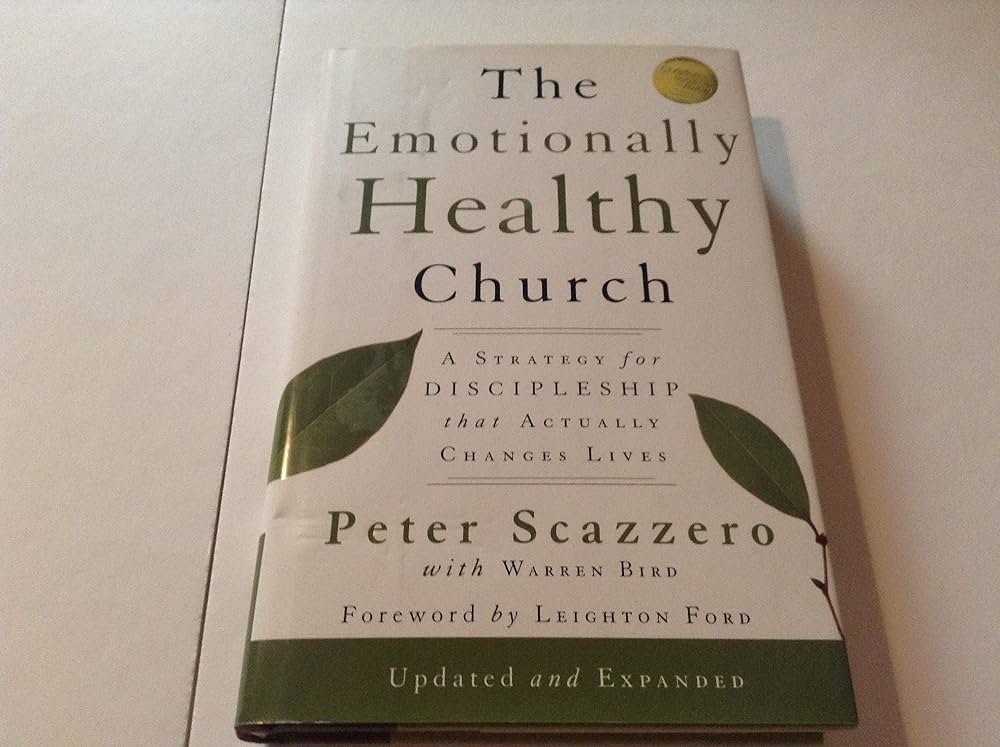
The Church Can't Be Healthier Than Its Leaders
Why Peter Scazzero's The Emotionally Healthy Church remains one of the most important books for pastors, ministry teams, and church leaders who want lasting transformation instead of surface-level growth.
David Collins · 14 min