What Wheeler Avenue Can Teach the Modern Church About Legacy, Leadership and Lasting Impact
A historic Houston congregation demonstrates how churches can honor their past, navigate pastoral succession, serve the total person, and remain relevant without surrendering their identity.
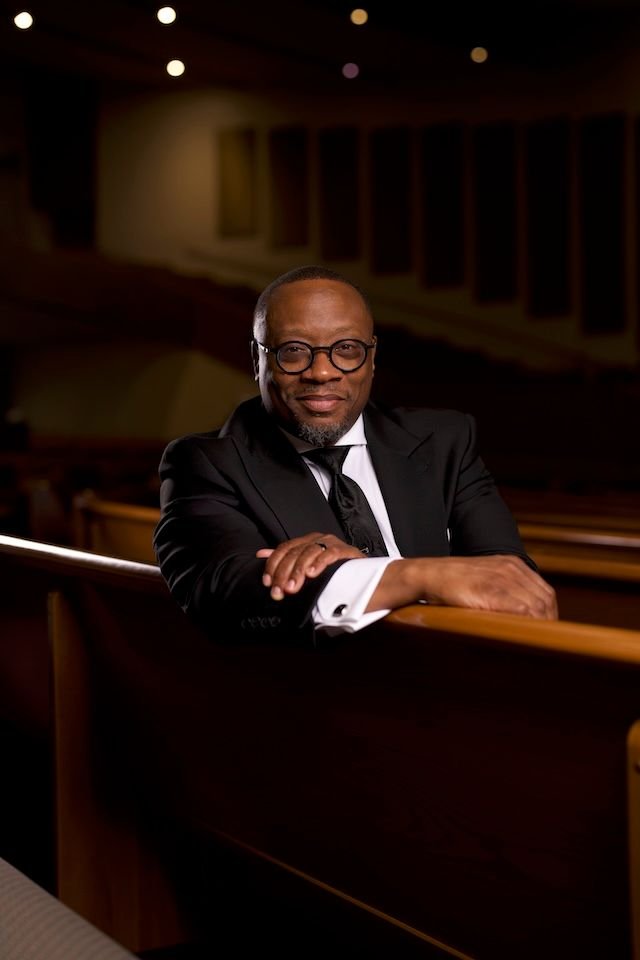
Some churches become museums. They preserve the aesthetic of a particular era, keep the doors open, and call it faithfulness. Others become franchises — chasing relevance so aggressively that nothing of substance remains beneath the programming. The rarest churches do something harder. They hold the thread of a founding vision across generations, pastoral transitions, and social transformation without losing either their identity or their momentum.
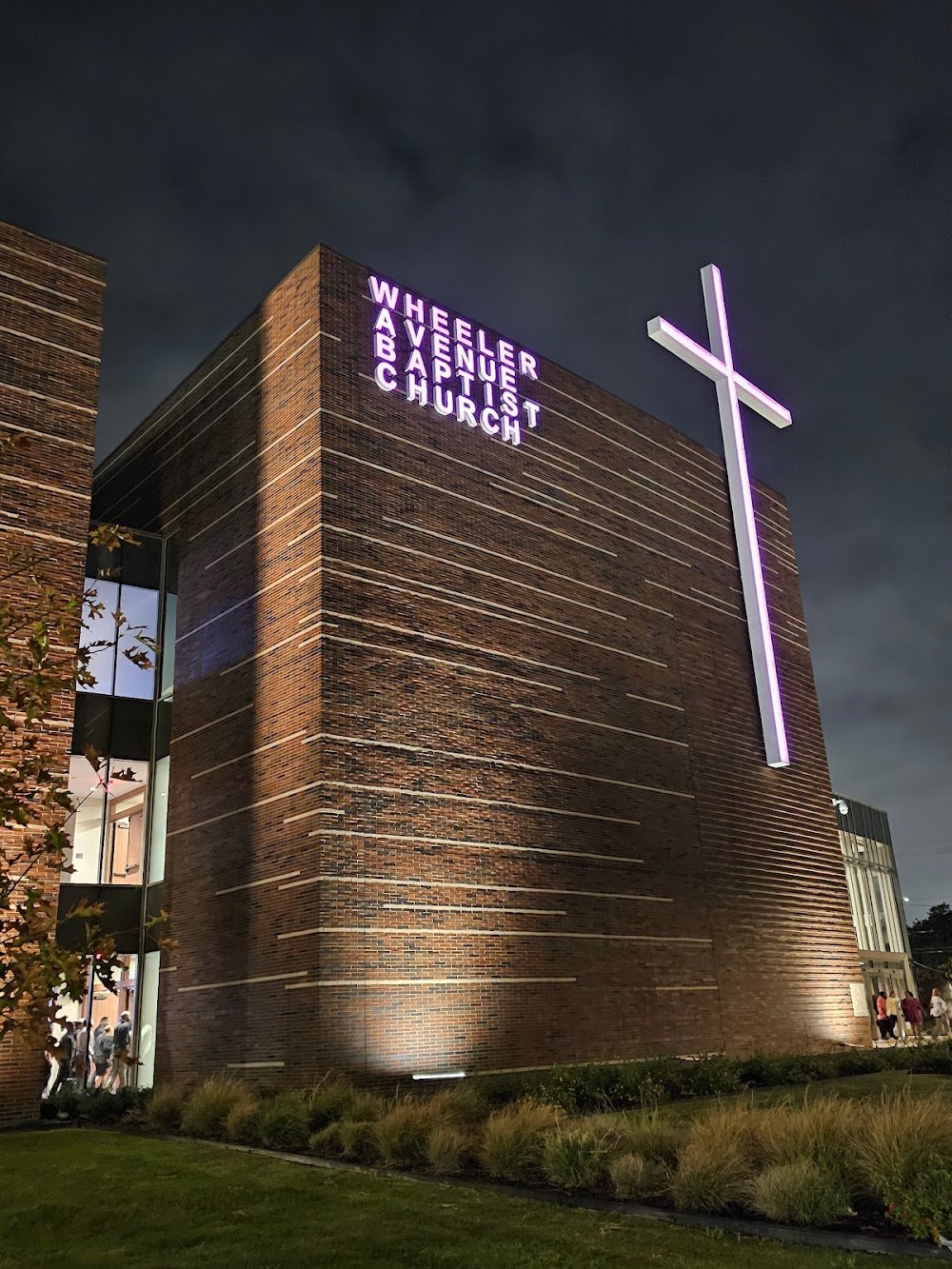
Wheeler Avenue Baptist Church in Houston, Texas is one of those churches. Founded in 1962 under the leadership of Dr. William A. Lawson, what began as a small gathering in a historically Black Houston neighborhood grew into one of the most consequential congregations in the American South — not because it was the largest, but because it was the most intentionally built. The story of Wheeler Avenue is not just a history lesson. It is a blueprint.
Thirteen People and a Larger Vision
Dr. William A. Lawson founded Wheeler Avenue Baptist Church in 1962 with thirteen charter members in a community that needed more than Sunday services. From the beginning, Lawson operated from a theology of wholeness — a conviction that the gospel had implications not just for the soul but for the body, the mind, the family, the neighborhood, and the economy.
That founding vision shaped everything that followed. The congregation's growth was never accidental. It was the product of sustained, intentional ministry to the whole person, rooted in a consistent theological framework and led by a pastor whose vision outlasted his own tenure.
A Theology Large Enough for the Whole Person
One of the most important lessons Wheeler Avenue offers is that a church's reach is limited by its theology. If the gospel you preach applies only to spiritual conversion, your ministry will reach only as far as the altar call. If it extends to education, economic empowerment, mental health, civic engagement, and community development, the church becomes a center of gravity for the neighborhood rather than a destination people visit once a week.
Wheeler Avenue built educational programs, supported historically Black colleges, engaged civil rights leadership, and developed community resources — not as add-ons to the real ministry, but as expressions of it. The programs changed over decades. The underlying theology did not.
For today's church leader, the question is direct: how large is your theology? Does your gospel have social implications? Does it speak to the economic conditions of your congregation? Does it address the whole person who sits in your pew — not just their eternal destiny but their present circumstances?
The Test of Pastoral Succession
The most dangerous moment in most church histories is not a financial crisis or a moral failure. It is the transition from a founding or long-tenured pastor to the next generation of leadership. Congregations built around the personality of a single leader often cannot survive that transition — and the statistics are not encouraging.
Wheeler Avenue navigated this transition with intentionality. When Dr. Marcus Cosby accepted the mantle of leadership, he did not inherit a management role — he inherited a mission. The succession worked not because the new pastor was a copy of the founder, but because the institution had a clear enough identity that new leadership could inhabit it without imitating it.
This is the often-missed insight: healthy succession is not about finding someone who leads the same way. It is about building an institution with a mission clear and strong enough that a different leader can carry it faithfully. The founder's job is to build something larger than himself. The successor's job is to continue something larger than himself. Both require ego subordination to vision.
Continuity Does Not Mean Copying
Dr. Marcus Cosby brought his own voice, his own scholarship, and his own leadership sensibility to Wheeler Avenue. A congregation that expected him to replicate Dr. Lawson would have been disappointed — and they would have missed the point. The continuity that matters is not stylistic. It is theological, missional, and cultural.
This is the often-missed insight: healthy succession is not about finding someone who leads the same way.
What has continued at Wheeler Avenue is the conviction that the church exists to serve and transform its community. What has evolved is the form that service takes, the language used to express the mission, and the tools deployed to accomplish it. That distinction — between core identity and adaptive expression — is one of the most valuable lessons a church leader can internalize.
Recommended readThe AdvantagePatrick LencioniThe definitive guide to organizational health for leaders — why healthy teams consistently outperform smart ones, and how to build a ministry culture where clarity and trust thrive.
View on AmazonA Preaching Ministry That Forms People
Both Dr. Lawson and Dr. Cosby are known for a preaching ministry that is simultaneously intellectually serious, pastorally warm, and socially engaged. The pulpit at Wheeler Avenue has never been merely inspirational — it has been formational. The congregation is expected to think, to grow, and to leave the building with a framework for applying what they heard.
In an era of entertainment-driven worship culture, this is a countercultural commitment. Wheeler Avenue's pulpit says, implicitly, that the congregation is capable of depth — and that depth is what the mission requires. That assumption shapes the people over time. Churches that preach to the lowest common denominator tend to produce congregations incapable of much more.
Sermoni helps pastors study scripture more deeply, organize their research, develop their message structure, and apply their insights with greater clarity — so the sermon you preach reflects the depth your congregation deserves.
When Outreach Becomes Infrastructure
The difference between a church with outreach programs and a church with outreach infrastructure is the difference between seasons and systems. Programs respond to need as it becomes visible. Infrastructure anticipates need, builds capacity before the crisis arrives, and serves at a scale that the moment-by-moment response can never reach.
Wheeler Avenue built infrastructure. Partnerships with educational institutions, sustained civic engagement, and long-term community investment created a web of relationships and resources that extended the church's reach far beyond what any single program could accomplish. When you build infrastructure, the ministry continues even when the founding pastor is no longer in the room.
Excellence Without Performance
There is a version of excellence in ministry that is primarily concerned with perception — the quality of the production, the impressiveness of the facility, the polish of the brand. And then there is an excellence that is primarily concerned with the people being served — the quality of the care, the depth of the teaching, the reliability of the systems, the trustworthiness of the leadership.
Wheeler Avenue has always operated in the second register. The excellence visible in its ministry — in its preaching, its programs, its community engagement — is not performative. It is the natural expression of a congregation that takes seriously both the people it serves and the God it represents. That distinction matters enormously because performance-based excellence is exhausting and ultimately empty. Mission-based excellence is self-reinforcing.
Five Lessons Church Leaders Can Apply
1. Let the mission determine the ministry
Start with the theological question — what does faithfulness look like in this neighborhood, for these people, at this moment? Let the answer to that question generate your programs, not the other way around. Programs borrowed from other contexts often fail not because they are bad but because they are solutions to someone else's problem.
2. Prepare for succession before it becomes urgent
The time to build a succession plan is not when the senior pastor announces a departure. The time is now — when there is space to think clearly, identify internal leaders, develop institutional clarity, and document the values that must survive any personnel change. Urgency is the enemy of good succession.
3. Treat Christian education as essential
Wheeler Avenue's investment in education reflects a theology that takes the life of the mind seriously. A congregation that is intellectually formed is harder to mislead, more capable of ethical decision-making, and more equipped to engage the complexity of the world its members inhabit Monday through Saturday.
4. Build partnerships not just programs
Institutional partnerships — with schools, civic organizations, health systems, and other congregations — multiply the church's impact without multiplying its overhead. They also signal to the community that the church sees itself as a participant in the neighborhood's flourishing rather than a vendor of spiritual services.
5. Measure transformation not activity
The most common mistake in evaluating church health is measuring activity — events held, programs offered, attendance recorded — without measuring transformation. Wheeler Avenue's enduring impact is not a function of how busy the calendar was. It is a function of what happened in the lives of real people over real time. Build the metrics that reveal that.
The Real Measure of a Great Church
A great church is not measured by its weekend crowd, its building square footage, or its staff count. It is measured by what it produces — the leaders it develops, the community it transforms, the people it restores, and the mission it sustains across generations. By that measure, Wheeler Avenue Baptist Church is an institution worth studying.
More importantly, it is an institution worth learning from — not to imitate its specific forms, but to internalize the principles underneath them: clarity of mission, theological depth, whole-person ministry, intentional succession, and the stubborn conviction that excellence in service of people is always worth the effort it costs.
"Let us not become weary in doing good, for at the proper time we will reap a harvest if we do not give up."Galatians 6:9
Key Takeaways
- A founding vision that is theologically rooted and clearly articulated can outlast any individual leader.
- Whole-person ministry — addressing spiritual, educational, economic, and civic needs — extends the church's reach beyond what Sunday services alone can accomplish.
- Successful pastoral succession depends on the institution having a mission larger than any personality.
- Continuity of identity does not require continuity of style — new leaders can carry an old mission in a new voice.
- Outreach infrastructure, built over time through partnerships and sustained investment, compounds in ways that programs alone cannot.
- Excellence rooted in mission is self-reinforcing; excellence rooted in performance is exhausting and ultimately hollow.
- Measuring transformation rather than activity is the only honest way to evaluate whether a church is doing what it claims to exist to do.
Questions for Reflection
- If your founding pastor (or current senior leader) left tomorrow, what would remain — and would it be enough to sustain the mission?
- Does your congregation's theology include the whole person, or primarily the soul? What would change if it did?
- What partnerships does your church currently have with institutions outside the congregation — and are those partnerships strategic or occasional?
- What does your church measure, and what do those metrics actually tell you about transformation in the lives of real people?
- What is the core identity of your congregation that new leadership must carry — and have you written it down clearly enough that someone else could find it?
- Where in your ministry are you performing excellence rather than practicing it? What would it look like to close that gap?
Christianpreneur Magazine may earn a commission from qualifying purchases made through Amazon affiliate links at no additional cost to the reader.
More in Church Leaders
See all
Pastor of the Month: Rich Villodas of New Life Fellowship
The Brooklyn-born lead pastor of New Life Fellowship is helping churches rediscover a slower, deeper, more emotionally healthy way to follow Jesus.
Marcus Reed · 7 min
Three Church Leaders to Watch in 2026: Dharius Daniels, Corey Brooks and Philip Anthony Mitchell
Pastor Dharius Daniels, Pastor Corey Brooks and Philip Anthony Mitchell are leading in three very different ways, but each is forcing the church to think more seriously about transformation, community impact and discipleship.
Christianpreneur Staff · 14 min
This Church Helped Cancel $35M in Medical Debt
Transformation Church in South Carolina helped erase $34.9 million in medical debt for more than 17,500 people across the Carolinas. The story is a powerful example of what can happen when generosity, strategy and community partnership work together.
Rachel Thompson · 4 min