Your Brain on Worship: What Neuroscience Can and Cannot Tell Us About Prayer, Praise and Spiritual Formation
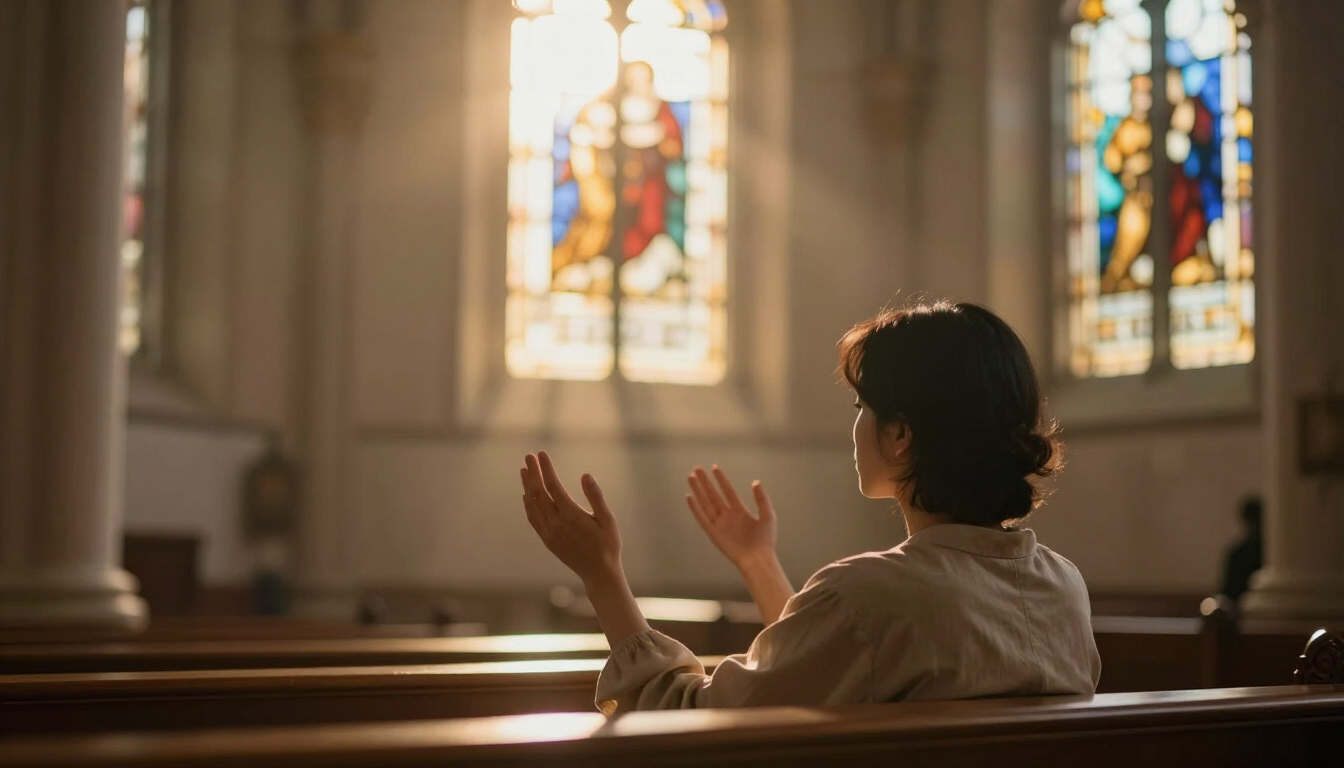
The choir reaches the final chorus. The room swells. Something shifts in the atmosphere — or in you — and you are not entirely sure which. A tear forms. Your chest tightens. You feel, for a moment, that you are standing somewhere between this room and another place entirely. Later, a skeptic might tell you that it was just dopamine. A neuroscientist might say the prefrontal cortex quieted and the limbic system activated. A theologian might say you encountered the living God. All three might be pointing at the same moment. Only one of those descriptions reaches all the way to the truth of what happened.
Neuroscience has made remarkable progress in the last three decades mapping the biological correlates of spiritual experience. Researchers can now observe changes in brain activity during meditation, prayer, communal singing, and moments of religious awe. That data is real, reproducible, and worth taking seriously. It is also widely misread — by skeptics who use it to dismiss faith and by Christians who are not sure what to do with it.
This article is not a defense of God's existence. That argument has been made elsewhere, better, and it is not the point here. The point is this: if you lead worship, pastor a congregation, or are simply a person trying to build a faithful and formative prayer life, the science of the brain and the theology of worship are not enemies. Understood carefully, they might be collaborators.
The Brain Does Not Disprove the Spiritual
The most common mistake in popular neuroscience coverage is to assume that because something has a biological correlate, it has only a biological explanation. If your brain lights up during prayer, the argument goes, that is what prayer is — a brain event. But this reasoning fails the most basic test of logic. Your brain also lights up when you fall in love. It activates when you see a painting that moves you. It responds to music, grief, moral outrage, and the smell of your grandmother's kitchen. No one seriously argues that love is nothing but neurotransmitters or that grief is simply the amygdala firing.
The brain is not where experience originates. It is where experience is processed. That distinction matters enormously when we talk about worship. The presence of a neurological response to prayer does not mean that prayer produced the response from within the brain alone, any more than the presence of a neurological response to music means that music is only electrical noise. Biology participates in the experience. It does not exhaust it.
Recommended readAnatomy of the SoulCurt ThompsonView on AmazonWhat Researchers Actually Study
To engage this material well, it helps to know what neuroscience actually measures. Researchers use tools like fMRI (functional magnetic resonance imaging), EEG (electroencephalography), and hormonal assays to observe the brain and body during specific practices. What they can observe includes: which brain regions are most active during meditation or prayer; how cortisol, oxytocin, and dopamine levels change during communal worship; how sustained practices of gratitude and mindfulness affect neural architecture over time; and how music affects emotional processing and social bonding.
What they cannot observe is whether God is present in the room, whether a prayer was heard, whether a transformation was spiritually caused, or whether the experience carries eternal significance. Those questions are not measurement problems. They are category problems. The instruments designed to measure biology were not designed to measure transcendence. Using them to definitively answer theological questions is like using a thermometer to determine whether a poem is good.
Worship Directs Attention
One of the most consistent findings in contemplative neuroscience is that attention is not passive. The brain is constantly filtering, prioritizing, and constructing the experience of reality from the information it receives. What you attend to — consistently, over time — shapes the neural pathways through which you perceive and interpret everything else. The theological word for this is formation.
Worship, rightly understood, is a practice of directed attention. When you praise God for his faithfulness, you are training your attention to look for and recognize faithfulness in your daily life. When you confess, you are training your attention to look honestly at yourself rather than away from yourself. When you receive the Lord's Supper, you are directing your attention to a story that frames the meaning of your life. The brain responds to that direction. Formation is, among other things, a biological process — not because biology is all that's happening, but because we are embodied creatures, and God works through the bodies he made.
Recommended readThe Soul of ShameCurt ThompsonView on AmazonMusic Reaches Places Speech Sometimes Cannot
Music is processed differently from speech in the brain. It activates the motor system, the limbic system, and the cerebellum in ways that spoken language alone does not. Communal singing, in particular, synchronizes breathing, heart rate, and even neural oscillations among participants. It creates what researchers call physiological coupling — a kind of embodied alignment between people in the same room doing the same thing at the same time.
This is not a modern discovery. The Psalms were songs before they were scripture. Israel sang at the Red Sea. The early church sang hymns. Paul commanded the Colossians to let the word of Christ dwell richly through "psalms, hymns, and spiritual songs." The neuroscience of communal music does not prove that worship works. It describes some of how worship works in the bodies and brains of the people who practice it. The mechanism is not the meaning.
"Let the message of Christ dwell among you richly as you teach and admonish one another with all wisdom through psalms, hymns, and songs from the Spirit, singing to God with gratitude in your hearts."Colossians 3:16
Prayer Is Relationship Not a Brain Hack
One of the more troubling trends in popular Christian content is the instrumentalization of spiritual practices. Gratitude journaling improves your cortisol levels. Meditation boosts focus. Prayer reduces anxiety. All of these things may be true. None of them is the reason to pray.
When prayer becomes a technique for achieving a neurological outcome, it ceases to be prayer in the fullest sense. It becomes self-optimization with religious language. The brain benefits of prayer are real and worth noting. But they are byproducts of a relationship, not the product of a protocol. A person who prays primarily to lower their blood pressure is using God the way they might use a supplement — which is to say, they are not quite praying at all.
This matters practically for how worship is designed. When the purpose of worship becomes the emotional experience it produces, the worship has become about the worshiper rather than the God being worshiped. The experience may still be genuine. The formation it produces will be shallow.
Recommended readThis Is Your Brain on MusicDaniel J. LevitinView on AmazonCorporate Worship Does Something Private Devotion Cannot Replace
The research on communal versus solitary spiritual practice is consistent: they are not interchangeable. Communal worship does things that private devotion cannot do, and private devotion does things that communal worship cannot do. The physiological coupling that happens in a room full of people singing together does not happen alone in a car, however sincerely you worship. The intimacy of private prayer accesses something that corporate liturgy does not reach in the same way.
The intimacy of private prayer accesses something that corporate liturgy does not reach in the same way.
The decline of corporate worship in American Christianity — accelerated by streaming services, pandemic habits, and individual preference — is not just an ecclesiological problem. It is a formation problem. People are not becoming less spiritual. They are becoming more privately spiritual and less corporately formed. The difference is not trivial. We were designed for both, and neither replaces the other.
Repetition Can Become Formation
Neuroplasticity — the brain's capacity to change its structure and function in response to experience — is one of the most significant findings in modern neuroscience. What the brain does repeatedly, it becomes better at. Pathways that are used frequently are strengthened. Pathways that are ignored atrophy.
This has direct implications for liturgy, habit, and spiritual discipline. Repetitive practices — the daily office, the Lord's Prayer, the regular Eucharist, the weekly Sabbath — are not rote or empty. They are architectural. They build neural structures through which spiritual reality is encountered. When someone who has prayed the same prayer for forty years reaches the end of life, they do not struggle to access that prayer. It is woven into who they are. Formation happened. Repetition was not the enemy of meaning. It was the carrier of it.
The Danger of Christian Neuroscience Claims
There is a growing cottage industry of books, podcasts, and conference talks that use neuroscience to validate Christian practice. Some of this is careful and responsible. Much of it is not. The errors tend to cluster around three problems.
The first is overgeneralization. A study conducted on advanced meditators in a lab setting is cited as proof that Christian prayer produces identical results in ordinary congregants. The jump is not warranted. Context, tradition, theological content, and the specific practice studied all matter.
The second is the fallacy of validation by correlation. Because prayer correlates with reduced anxiety in some studies, it does not follow that prayer is primarily a mental health intervention or that its validity depends on those correlations. If future studies found weaker correlations, that would not make prayer less true or less valuable.
The third is the confusion of description and explanation. Neuroscience describes what happens in the brain during worship. It does not explain why worship matters, whether God is present, or what the experience means in an eternal frame. Those questions belong to theology, not to biology.
Worship Can Support Mental Health Without Replacing Treatment
One area where the research is genuinely useful — and where the church has sometimes been irresponsible — is the relationship between worship, spiritual practice, and mental health. Studies consistently find that regular religious practice is associated with lower rates of depression, anxiety, and substance use, and with greater resilience in the face of adversity. These findings are robust enough to take seriously.
What they do not support is the use of those findings to substitute spiritual practice for clinical care. Depression is not a worship deficit. Anxiety disorders are not failures of faith. Trauma does not heal by prayer alone. Pastors who imply otherwise — even subtly, even with the best intentions — cause harm. The brain, like every other part of the body, can be ill in ways that require treatment, not spiritual correction. Worship supports mental health. It does not replace the care of trained clinicians.
Seven Ways to Build a More Formative Worship Life
If the research on attention, repetition, embodiment, and community is taken seriously, it suggests some practical reorientations for both personal worship and congregational design.
1. Begin with attention not atmosphere
Atmospheric worship — great lighting, a skilled band, high production value — is not wrong. But if it becomes the precondition for encountering God, formation will be shallow and inconsistent. Train yourself and your congregation to bring attention to worship, not to wait for atmosphere to create it.
2. Sing truth you can carry
Songs that go in easily and stay in are doing formation work all week. Choose music — personally and congregationally — that has theological content worth carrying. The brain will hold it. Make sure what it holds is worth holding.
3. Make room for silence
The most consistent finding in contemplative neuroscience is that silence is not the absence of practice — it is a practice in itself. Stillness activates the default mode network in ways that support integration, self-reflection, and what might be called the processing of meaning. Worship that is entirely full, loud, and fast leaves no room for this. Neither does prayer that is entirely spoken.
4. Practice emotional honesty
Liturgies that only express praise, gratitude, and triumph produce Christians who cannot bring grief, anger, confusion, or doubt into the presence of God. The Psalms are more honest than most modern worship sets. The brain stores unprocessed emotion. Worship that invites honest emotional range is more formative than worship that curates a single register.
5. Connect worship to action
Gratitude without expression, confession without behavioral change, and praise without corresponding action create a feedback loop that can feel spiritual while producing no transformation. The most formative practices are those that connect the interior experience to an exterior change in how you live.
6. Repeat with intention
Do not rotate through spiritual practices out of boredom. The consistent, repeated practice — the daily prayer, the weekly Sabbath, the regular Eucharist — is building something. Give it time to build. Formation is slow work. Most meaningful neural change happens over months and years, not sessions.
7. Worship with the body
Standing, kneeling, raising hands, singing aloud, fasting, walking a labyrinth — embodied practices are not primitive or performative. They are complete. The brain does not separate the physical from the spiritual the way Western rationalism does. Worship that engages the body engages more of the person.
Recommended readAnatomy of the SoulCurt ThompsonView on AmazonWhat Pastors and Worship Leaders Should Reconsider
For those who lead worship or pastor congregations, the neuroscience of spiritual practice raises a practical question that most seminary training did not address: are the worship environments we design actually forming people, or are they producing experiences that feel like formation?
The distinction matters. A congregation can have a remarkable worship service every weekend and still produce people who are not becoming more patient, more generous, more honest, or more present to God during the week. Emotional peak experiences in a well-produced worship environment do not automatically transfer to daily formation. Formation requires repetition, embodiment, theological content, community, and practices that connect Sunday to Monday.
Pastors who are serious about formation will design for the whole week, not only the service. They will choose music with doctrinal weight. They will teach congregants to pray throughout the day, not only in gathered settings. They will make room for silence, confession, and lament. They will connect the interior experience of worship to the exterior demands of discipleship.
Science Can Describe the Experience Not Define the Encounter
At the end of the measurement, after the fMRI scan and the cortisol assay and the EEG readout, there remains something that the instruments do not reach. Not because the scientists are incompetent. Because the encounter they are trying to measure was never only biological.
Augustine wrote in the fifth century that our hearts are restless until they rest in God. Neuroscience can describe the restlessness. It can map some of what happens when the restlessness quiets. What it cannot do is tell you whether the quiet came from a technique or from a Person. That question requires a different kind of attention — the kind that the seven practices above are meant to cultivate. Not attention to your brain, but attention to God.
"Be still, and know that I am God."Psalm 46:10
Key Takeaways
- Neuroscience observes the biological correlates of spiritual experience — it does not explain them away or fully explain them.
- The presence of a brain response to prayer does not mean prayer is only a brain event, any more than a brain response to love means love is only biology.
- Worship is a practice of directed attention, and sustained attention shapes neural architecture over time — this is what the church has always called formation.
- Communal and private worship are not interchangeable; both are necessary and each does something the other cannot.
- Repetitive liturgical practices build neural pathways that make spiritual encounter more accessible over time — repetition is not the enemy of meaning.
- Worship supports mental health and may be associated with lower rates of anxiety and depression, but it is not a substitute for clinical care when clinical care is needed.
- The most dangerous misuse of neuroscience in Christian contexts is using it to validate spiritual practice as self-optimization rather than as relational encounter with God.
Questions for Reflection
- When you worship, are you bringing attention to the practice, or waiting for an atmosphere to generate the experience for you? What would it take to shift that?
- What songs, prayers, or liturgical practices are woven into who you are through years of repetition? What do those carry for you now?
- Is there an emotional range — grief, anger, confusion, honest doubt — that you rarely or never bring into prayer or worship? What has kept it out?
- If someone evaluated your congregation's worship design specifically for its formation potential — not for its experiential quality — what would they find?
- Where in your week does the interior experience of Sunday worship connect to an exterior change in how you live? Where does it not?
- What would it mean for your church to design for the whole week, not only the Sunday service? What would that require that you are not currently doing?
Christianpreneur Magazine may earn a commission from qualifying purchases made through Amazon affiliate links at no additional cost to the reader.
More in Lifestyle
See all
The True Story Behind "Oh Happy Day" (It Started as a Fundraiser)
Five hundred vinyl copies, sold by hand to pay for a bus trip to Washington. Nobody involved was trying to make a hit, and that may be exactly why they did.
Jonathan Miles · 6 min
6 Gospel Songs That Secretly Teach Sound Theology (and the Stories Behind Them)
You have sung these songs a hundred times. Here is the theology hiding in plain sight, and the true stories that produced it.
Jonathan Miles · 8 min
Faith and Personal Growth in Every Season
The seasons that feel like interruptions often do the deepest formational work. A meditation on growth, grief, and what it means to keep becoming.
Deborah Ellison · 6 min