Your Church Already Has a Culture. The Question Is Whether It Is Healthy.
Church culture is not created by mission statements, slogans, or Sunday experiences alone. It is revealed by what leaders tolerate, how people are treated, where accountability exists, and what repeatedly happens when no one is watching.
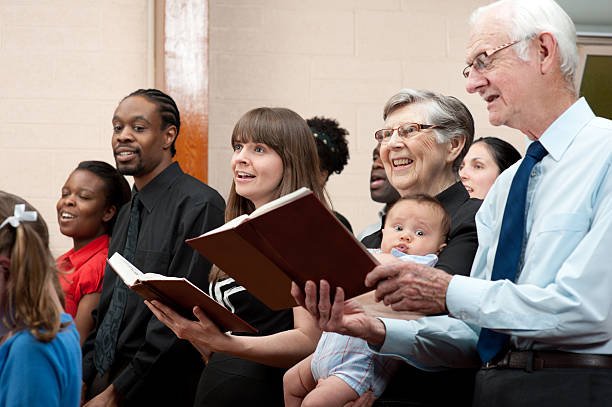
Every church has a culture. It was not voted on, it was not announced from the pulpit, and it almost certainly does not appear in the vision document the board approved two years ago. It formed gradually — through a hundred small decisions, a handful of uncorrected behaviors, and the slow accumulation of what people learned was safe to say, safe to do, and safe to be around here. Culture is never neutral. It is always forming the congregation in some direction. The question every church leader must ask is not whether they have a culture but whether that culture is one they would choose if they were choosing intentionally.
Culture Is the Church's Unwritten Rulebook
Organizational culture researchers define culture as the shared assumptions, values, and behaviors that determine how a group actually functions — as distinct from how it says it functions. For churches, this distinction is spiritually significant. A congregation can hold every correct doctrine about humility, accountability, and servant leadership while its lived culture communicates the opposite. The unwritten rulebook — what people learn by watching, not by reading — is more powerful than the stated rulebook. It is also more honest.
Culture is transmitted through stories (which ones get told), through consequences (what happens when someone makes a mistake), through priorities (what gets resourced and what gets cut), and through symbols (whose voices matter, who gets a seat at the table). If a church says it values honesty but people who tell hard truths are quietly marginalized, the culture has spoken more clearly than any mission statement.
"Whoever walks in integrity walks securely, but whoever takes crooked paths will be found out."Proverbs 10:9
Seven Signs of an Unhealthy Church Culture
Unhealthy cultures rarely announce themselves. They accumulate. The following seven signs are not proof of inevitable failure — they are warning indicators that the unwritten rulebook is working against the congregation's stated values.
1. People are afraid to tell the truth
In a culture of fear, honesty is rationed. Staff members soften feedback. Elders avoid conflict with the senior pastor. Congregation members smile and say fine when they are not fine. The tell is not that hard conversations are rare — they are hard everywhere — it is that people have learned through experience that telling the truth carries a cost. When a church cannot hear its own bad news, it cannot correct its own bad direction.
2. The senior leader is functionally unaccountable
Governance structures may exist on paper — a board, an elder council, a deacon body — but if those structures have no real authority to question, correct, or, if necessary, remove the senior leader, they are decorative. Functional unaccountability is one of the most reliable predictors of long-term ministry collapse. The senior leader who is not accountable is the senior leader who, eventually, does the thing no one saw coming — because no one was positioned to stop it.
3. Loyalty is valued more than character
Healthy teams value character first and build loyalty through shared mission. Unhealthy cultures invert this: loyalty becomes the primary qualification for trust and advancement. Staff members are promoted not because they demonstrate wisdom, integrity, or competence but because they are aligned with the leader. People who raise concerns are seen as disloyal rather than caring. This creates teams that are very good at agreeing and very bad at preventing mistakes.
4. Conflict moves sideways instead of forward
In a healthy culture, conflict between people goes directly between those people. In an unhealthy culture, it moves sideways — through gossip, triangulation, and unofficial conversations. Someone is hurt by a staff member and tells three other people before, or instead of, telling the staff member. A ministry leader disagrees with a decision and processes it in the parking lot instead of the meeting room. Sideways conflict is not primarily a communication problem; it is a safety problem. People route around direct conversation because direct conversation has not felt safe.
5. Busyness is mistaken for fruitfulness
A culture of busyness values effort over effectiveness and calendar density over actual outcomes. Staff are praised for working long hours regardless of what those hours produced. Programs are retained because they require a lot of work rather than because they are working. Margin — for prayer, for reflection, for family, for rest — is treated as a luxury available only to people who are not serious about the mission. This is a spirituality problem, not a scheduling problem.
6. Image management replaces repentance
Churches are not immune to the image-management instincts that shape institutions of every kind. When something goes wrong — a staff failure, a financial shortfall, a pastoral wound to a congregant — the question becomes how it looks rather than how it is addressed. Apologies are framed as misunderstandings. Corrections happen quietly and are never named publicly. The congregation senses something is wrong and is never given an honest accounting. This is the cultural equivalent of whitewashing a wall: it looks better temporarily and gets structurally worse.
7. People are useful until they are inconvenient
In utilitarian church cultures, people are valued for what they can contribute rather than for who they are. Volunteers who stop being available, staff members who begin raising concerns, long-term members who develop needs that require more than they give — these people quietly find themselves on the outside. The congregation may never be told they are being sidelined, but they feel it. And they remember it. When people learn that belonging is conditional on usefulness, the church has built its community on a foundation that the gospel does not support.
Recommended readThe Emotionally Healthy ChurchPeter ScazzeroA compelling case for emotional health as inseparable from spiritual maturity — and a practical framework for leading a church that genuinely heals people.
View on AmazonHealthy Culture Begins at the Top
Culture flows downward. This is not a cynical observation about hierarchy — it is a sociological reality that every healthy leader learns to take seriously. What the senior pastor tolerates becomes what the staff tolerates. What the elder board models becomes what the deacon body mirrors. What the ministry director normalizes becomes what the volunteer team inherits. Culture does not begin with a vision statement; it begins with behavior. Specifically, with the behavior of the person or people at the top of the organization, in the moments when no one is measuring.
This is why personal spiritual health in leaders is not a private matter. It is an organizational matter. A leader who is emotionally reactive shapes a staff culture of anxiety. A leader who is not self-aware creates a culture where blind spots go unchallenged. A leader who genuinely receives feedback from others, who owns mistakes without performance, who treats correction as a gift rather than a threat — that leader creates the conditions where everyone below them can do the same.
A church that talks about margin in its sermons but does not build margin into its staff calendar has a values gap it has not named yet.
A compelling case for emotional health as inseparable from spiritual maturity — and a practical framework for leading a church that genuinely heals people.
View on AmazonSafety Is Part of Spiritual Health
One of the most underappreciated dimensions of church culture is psychological safety: the degree to which people feel they can speak honestly, ask questions, disagree with leaders, and make mistakes without being shamed, excluded, or punished. Safety is not the same as comfort. Healthy churches are not conflict-free. They are environments where conflict can be named and worked through because the relationship is strong enough to survive the discomfort.
For survivors of spiritually abusive communities, safety is a theological need, not merely a preference. Churches that want to reach and retain people who have been wounded by previous church experiences must build cultures where the welcome is not merely verbal. The culture communicates welcome or the absence of it long before the sermon does. What happens when someone asks a question the leaders find uncomfortable? What happens when a volunteer makes a mistake? What happens when a congregant raises a concern about leadership? Those moments are culture-defining. They are also gospel-proclaiming, or gospel-contradicting.
Healthy Churches Care for Their Leaders Too
Pastoral burnout is not primarily a scheduling problem. It is a culture problem. In churches that treat leaders as resources rather than people, the burnout rate is predictable. In churches that build care for leaders into the organizational design — sabbatical policies that are actually used, pastoral counseling budgets that are actually funded, peer communities that are actually prioritized — the retention rate improves and the quality of leadership deepens over time.
A church that talks about margin in its sermons but does not build margin into its staff calendar has a values gap it has not named yet. Healthy culture requires alignment between what is preached and what is practiced — at every level, starting with those who do the preaching.
The Eight Systems of a Healthy Church Culture
Culture is supported by systems. An organization cannot sustain a healthy culture through intention alone — it needs structures that make the desired behaviors easier and the undesired behaviors harder. Healthy churches tend to have these eight systems operating with at least functional clarity:
1. A clear discipleship pathway
People need to know how to grow. A discipleship pathway is not a curriculum — it is an answer to the question, "If someone comes to faith here, how do we walk with them toward maturity?" Without clarity here, people plateau. With it, the culture sends a consistent signal that formation is the main thing.
2. A dependable care system
Congregants who are going through crisis need to know how to get care and have confidence it will come. A care system includes clear points of contact, trained lay ministers or deacons, and a referral pathway for clinical needs. Churches that care for people only when a staff member notices a need will always miss most of the need.
3. A leadership-development system
The best church cultures are always developing the next generation of leaders. This is not accidental — it is designed. Mentorship, coaching, intentional challenge, and room to fail are built into the system. Churches that develop leaders from within create cultures of investment and belonging. Churches that always hire leaders from outside create cultures of skepticism and low ceiling.
4. A communication system
Information asymmetry creates anxiety in organizations. When people do not know what is happening, they fill the gap with assumption — and assumption tends toward the negative. A healthy communication system ensures that the people who need information have it, that decisions are explained rather than merely announced, and that the congregation is treated as adults who can handle reality.
5. A volunteer system
Volunteers are the largest human resource in most churches. How they are recruited, trained, supported, and appreciated communicates enormous amounts of cultural information. Volunteers who feel used eventually leave. Volunteers who feel seen, equipped, and genuinely thanked become the backbone of a congregation that sustains its work across decades.
6. A conflict-resolution system
Matthew 18 is not only a passage — it is a system. Churches that take it seriously build cultures where people know how to bring grievances directly, what to do if direct conversation does not resolve the issue, and that leadership will take complaints seriously rather than protect itself. The absence of a clear process for handling conflict is one of the most common contributors to church splits and pastoral exits.
7. A financial-accountability system
Financial opacity is a trust-killer in church culture. Healthy churches operate with financial systems that include independent audits, elder or deacon oversight, separation of financial duties, and transparent reporting to the congregation. This is not mere best practice — it is an act of stewardship that builds the kind of trust that sustains generosity over decades.
8. A measurement system
Healthy cultures know how they are doing. Not through performance metrics that flatten people into numbers, but through honest, regular assessment of whether the mission is being accomplished and whether the community is genuinely healthy. Measurement without care becomes surveillance. Care without measurement becomes sentiment. Healthy cultures find the integration.
The 90-Day Church Culture Reset
Culture does not change in a single meeting or a single sermon series. It changes through sustained, intentional leadership over an extended period. The following 90-day framework is not a magic solution — it is a structured way to begin the work that the culture actually requires.
Days 1–30: Listen and Diagnose
Before any changes are announced, spend the first thirty days listening. Conduct confidential conversations with staff at every level. Survey congregation members with specific, honest questions. Bring in a trusted outside voice — a consultant, a denominational resource, a peer pastor — who can observe what insiders cannot see. Resist the temptation to diagnose before you have actually listened. The presenting problem is almost never the root problem.
Days 31–60: Clarify and Correct
Once the diagnosis is clear, begin making corrections with transparency. Name what was not working — in appropriate settings, with appropriate specificity. Reset expectations for staff behavior, communication patterns, and accountability structures. Make visible changes that signal the culture is shifting: a new meeting structure, a new feedback process, a new policy that was previously absent. Clarity is a gift in this phase. Vague reassurances accomplish less than honest, specific commitment.
Days 61–90: Reinforce and Measure
Culture change requires reinforcement far longer than sixty days, but the third phase is about establishing the habits and measurements that will carry the work beyond the initial sprint. Celebrate early evidence that things are shifting. Name the behaviors you want to see more of. Create checkpoints for the systems you put in place in month two. And be honest about what is still not working — the congregation and staff will trust leadership more, not less, when leaders demonstrate that self-assessment is an ongoing practice and not a one-time event.
Culture Is What People Learn About God From Being Around Us
The most serious argument for investing in church culture is not organizational — it is theological. People learn who God is, in part, from what they experience in the communities gathered in His name. A church culture that is safe communicates something about the safety of the God it worships. A culture that practices genuine accountability communicates something about a God who takes righteousness seriously. A culture that cares for the vulnerable, that develops leaders rather than consuming them, that handles conflict with honesty and grace — that culture becomes a living sermon, week by week, about the character of the One the church exists to proclaim.
Culture is not everything in a church. The gospel is everything. But the culture is the container in which the gospel is received — or rejected. Build the container well.
"By this everyone will know that you are my disciples, if you love one another."John 13:35
Key Takeaways
- Every church has a culture — formed by what leaders tolerate, what is rewarded, and what repeatedly happens when no one is watching.
- The unwritten rulebook is more powerful than the stated rulebook. Culture communicates more clearly than mission statements.
- Seven signs of an unhealthy church culture: fear of truth-telling, unaccountable senior leadership, loyalty over character, sideways conflict, busyness mistaken for fruitfulness, image management over repentance, and conditional belonging.
- Culture flows from the top. The senior leader's personal spiritual and emotional health is an organizational issue, not only a private one.
- Psychological safety is a theological need — especially for people who have been wounded by previous church experiences.
- Eight systems support a healthy culture: discipleship pathway, care system, leadership development, communication, volunteer management, conflict resolution, financial accountability, and measurement.
- A 90-day reset framework — listen and diagnose, clarify and correct, reinforce and measure — can begin the process of culture change without manufacturing quick fixes.
- Church culture is ultimately a theological matter: it is what people learn about God from being around us.
Questions for Reflection
- If you asked five people in your congregation to describe your church culture in three words, what do you think they would say? Would you be comfortable with those words?
- Where in your church is the unwritten rulebook most clearly different from the stated rulebook? What is being communicated in that gap?
- Who in your organization is functionally unaccountable right now? What would it take to change that?
- When someone in your church tells a hard truth — to leadership, to a staff member, to another congregant — what typically happens? What does that response teach people?
- Of the eight systems listed, which one is most absent or least functional in your current ministry? What would it take to build it?
- What would a person who had been hurt by a church learn about God from spending six months in your congregation? Is the answer you want to give the same as the answer they would give?
Christianpreneur Magazine may earn a commission from qualifying purchases made through Amazon affiliate links at no additional cost to the reader.
More in Church Leaders
See all
Pastor of the Month: Rich Villodas of New Life Fellowship
The Brooklyn-born lead pastor of New Life Fellowship is helping churches rediscover a slower, deeper, more emotionally healthy way to follow Jesus.
Marcus Reed · 7 min
Three Church Leaders to Watch in 2026: Dharius Daniels, Corey Brooks and Philip Anthony Mitchell
Pastor Dharius Daniels, Pastor Corey Brooks and Philip Anthony Mitchell are leading in three very different ways, but each is forcing the church to think more seriously about transformation, community impact and discipleship.
Christianpreneur Staff · 14 min
This Church Helped Cancel $35M in Medical Debt
Transformation Church in South Carolina helped erase $34.9 million in medical debt for more than 17,500 people across the Carolinas. The story is a powerful example of what can happen when generosity, strategy and community partnership work together.
Rachel Thompson · 4 min