Four Churches, Four Models: What Healthy Ministry Looks Like in America Today
2819 Church, New Life Covenant Church Southeast, Wheeler Avenue Baptist Church, and Change Church demonstrate that effective ministry does not have one appearance, one worship style, or one growth formula.
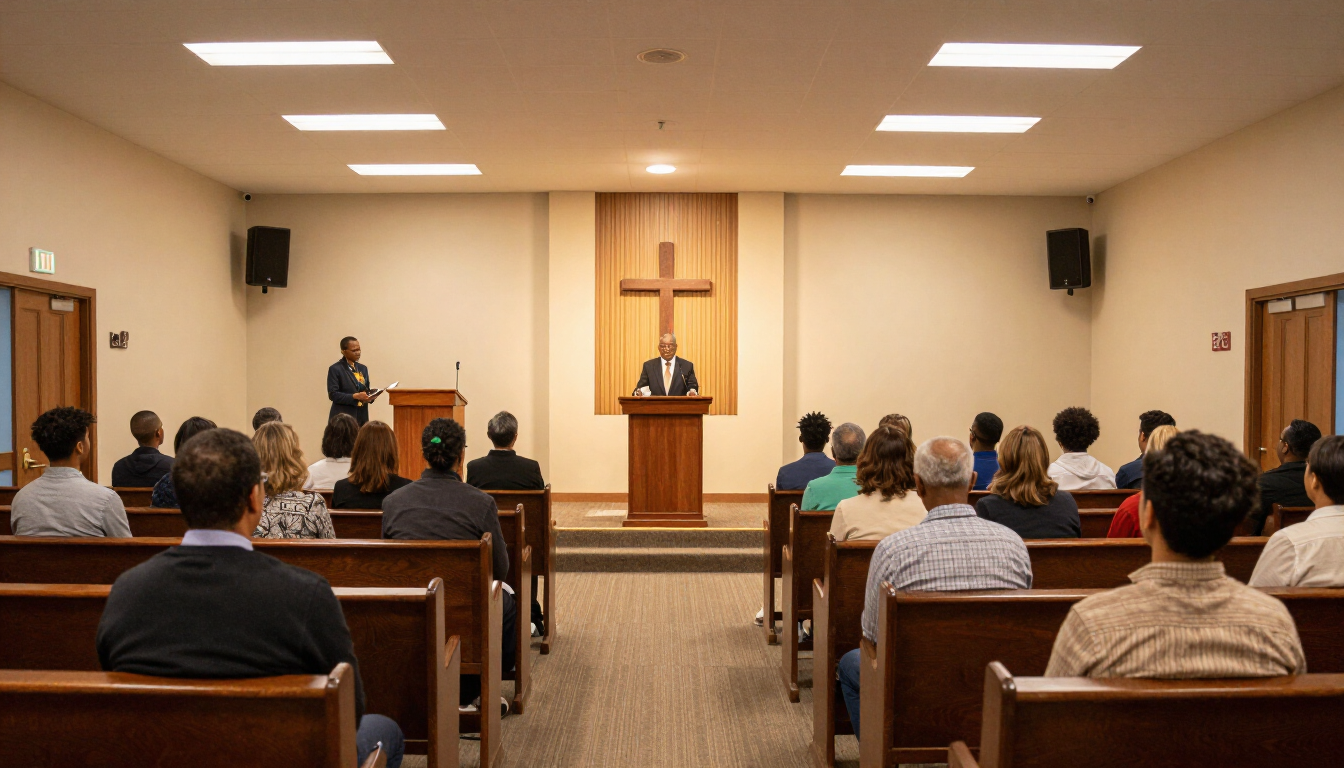
What makes a church great? The question sounds simple. The answers are not. Attendance alone cannot answer it — history is full of large congregations that produced thin disciples. Budget cannot answer it. Buildings cannot answer it. Neither can a polished weekend experience or a pastor with a significant social media following.
Greatness in a church, properly understood, is measured by transformation — in individual lives, in households, in the neighborhoods the congregation inhabits, and in the leaders it sends into the world. By that standard, the congregations worth studying are not always the most famous. They are the most intentional.
This piece examines four American churches whose approaches to ministry differ substantially in style, size, and context but share a common commitment to doing the actual work of the gospel with clarity, structure, and measurable care for real people. They are not presented as perfect models. They are presented as instructive ones.
Recommended readSimple ChurchThom Rainer and Eric GeigerThe landmark study on why churches that clarify their process of making disciples consistently outgrow and outlast those that do not — essential reading for any leader rethinking their ministry model.
View on AmazonHow We Evaluated the Churches
Each congregation was evaluated across six dimensions that, taken together, describe a church that is doing more than running a successful organization.
Biblical clarity
Is the preaching and teaching ministry anchored in Scripture, theologically coherent, and substantive enough to form adults over time? A church whose teaching could be replaced by inspirational content without anyone noticing has a biblical clarity problem.
Missional alignment
Does the church have a clear, stated, and practiced sense of who it exists to serve and how? Missional alignment is visible when resources, staff time, programs, and calendar are organized around a coherent answer to the question: what are we here to do?
Formation beyond attendance
Does the church move people from attending to growing to serving to sending? A congregation that measures success only in seats filled has confused access with formation.
Community responsibility
Does the church take responsibility for the flourishing of the neighborhood, city, or population it serves — not as a program add-on but as an expression of its theology?
Leadership and organizational health
Is the leadership team functioning with clarity, accountability, and sustainable structure? Healthy ministries are rarely built on heroic individual effort. They are built on healthy teams operating inside clear systems.
Transferable lessons
Can other churches learn something specific and actionable from this congregation's approach — regardless of their size, budget, or context? Models that only work for megachurches with multi-million-dollar facilities are interesting case studies, not transferable frameworks.
The Missional-Clarity Model: 2819 Church
Lead Pastor Philip Anthony Mitchell planted 2819 Church in Atlanta, Georgia, with a conviction that the church of the 21st century had to be as comfortable in digital spaces as in physical ones — not because it was trendy, but because that is where the people it was called to reach actually live.
The name itself carries meaning. 2819 is the address of the original church location, a deliberate decision to anchor a digitally distributed ministry to a specific, physical place. The congregation worships in person and online, but it does not treat those two modes of engagement as fundamentally different categories of belonging.
Digital attendees are treated as disciples
Where many churches treat online attendance as a preview for the real thing, 2819 builds online community members into full discipleship pathways — small groups, serving teams, and giving structures that do not require physical proximity. The practical result is a congregation whose reach substantially exceeds its zip code without losing the relational density that formation requires.
Children are formed not merely supervised
2819's children's ministry operates on the same theological seriousness as its adult programming. The conviction is that formation begins in childhood, and a church that is intellectually rigorous with adults but content to merely entertain children is sending a message about whose discipleship it takes seriously.
What distinguishes New Life is not its size but its organizational clarity about how Sunday worship and Monday-through-Saturday life connect.
What other churches can learn from 2819
The question is not whether your church should go digital. The question is whether your current digital presence is designed for formation or merely for broadcast. 2819 demonstrates that the gap between those two postures is architectural — it requires building different structures, not simply streaming existing ones.
The Balanced-Ministry Model: New Life Covenant Church Southeast
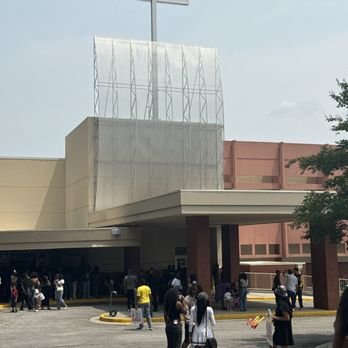
Senior Pastor John F. Hannah leads New Life Covenant Church Southeast in Chicago, Illinois, one of the largest and most consistently growing congregations in the Midwest. What distinguishes New Life is not its size but its organizational clarity about how Sunday worship and Monday-through-Saturday life connect.
New Life operates as a multi-site congregation with a commitment to remaining genuinely embedded in the Chicago communities it serves — not a satellite broadcast model but a locally rooted one that deploys real pastoral leadership into each context.
Prayer functions as infrastructure
New Life is known for a prayer culture that is not ornamental. Corporate prayer is not squeezed into a few minutes before the main event. It is treated as a primary means of spiritual formation — something the congregation does together with regularity and intentionality. That culture shapes what the people expect from God and from themselves.
Bringing Sunday into Monday
New Life has invested substantially in programming that addresses the weekday lives of its members — financial wellness, career development, family health, and community service. The theology behind this investment is that the gospel has implications for all of life, not just the hour of gathered worship. Sunday is the formation center; the rest of the week is the deployment field.
What other churches can learn from New Life
Balanced ministry requires intentional structure. A church that wants to address the whole person cannot do so through occasional special events. It requires ongoing programming, trained leaders, and a pastoral team that measures success by the condition of families and neighborhoods, not only by weekend attendance.

The Institutional-Longevity Model: Wheeler Avenue Baptist Church
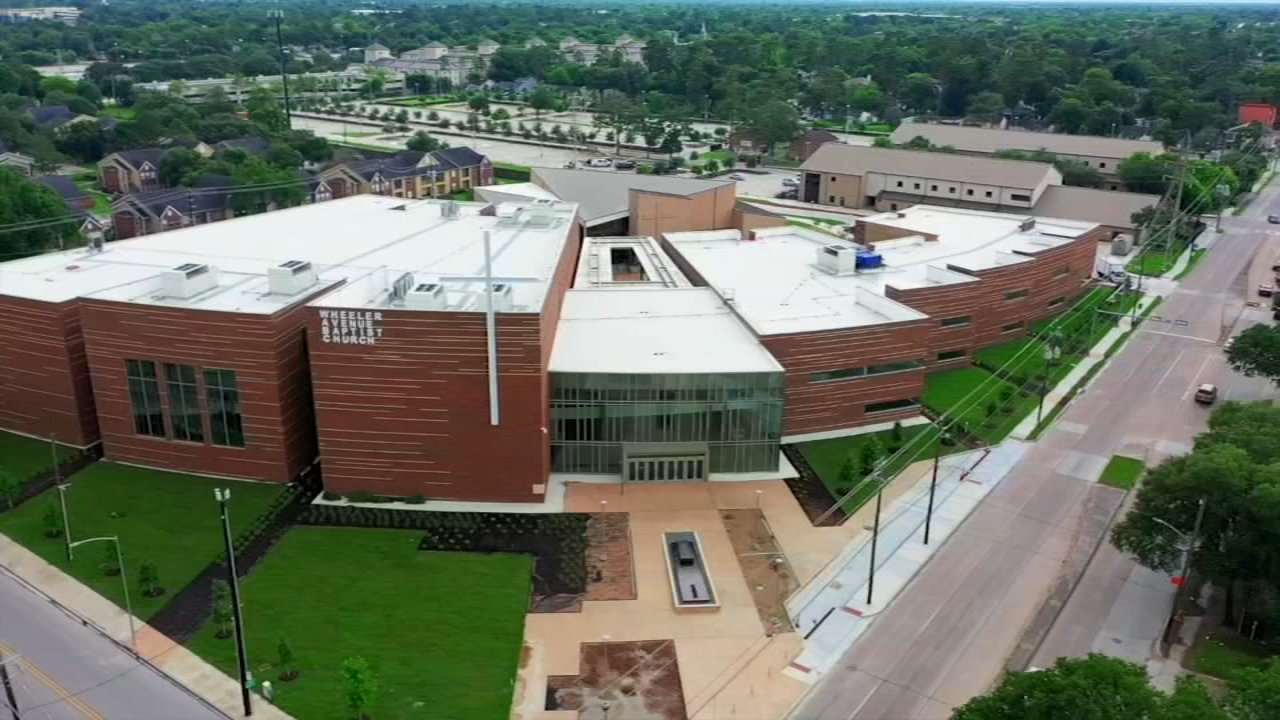
Senior Pastor Dr. Marcus D. Cosby leads Wheeler Avenue Baptist Church in Houston, Texas, a congregation founded in 1962 by Dr. William A. Lawson with thirteen charter members and a theology large enough to address the whole person. More than six decades later, the mission has outlasted its founder and successfully navigated pastoral succession — one of the most difficult transitions any church can navigate.
CP Mag recently published a full feature on Wheeler Avenue's legacy and leadership lessons. Read: What Wheeler Avenue Can Teach the Modern Church About Legacy, Leadership and Lasting Impact
Compassion becomes an institution
Wheeler Avenue did not add community development programs to an existing ministry. It built community responsibility into the theological foundation from the beginning. Educational partnerships, civic engagement, and economic empowerment were expressions of the gospel, not add-ons to it. The result is a church whose impact on its city is woven into the city's fabric across generations.
Intergenerational ministry must be intentional
One of the quiet challenges facing any historic church is retaining the next generation without abandoning the commitments that gave the institution its character. Wheeler Avenue has navigated this tension not by softening its theological identity but by demonstrating, through preaching and practice, that that identity is as relevant to a 25-year-old as it was to a 65-year-old in 1972.
What other churches can learn from Wheeler Avenue
The institutions most worth studying are those that have proven durable across time. Wheeler Avenue's longevity is not accidental. It is the product of a founding theology large enough to contain both the personal and the social gospel, a succession plan that transferred mission rather than personality, and a commitment to excellence rooted in the people being served rather than the impressiveness of the production.
The Transformation-Pathway Model: Change Church
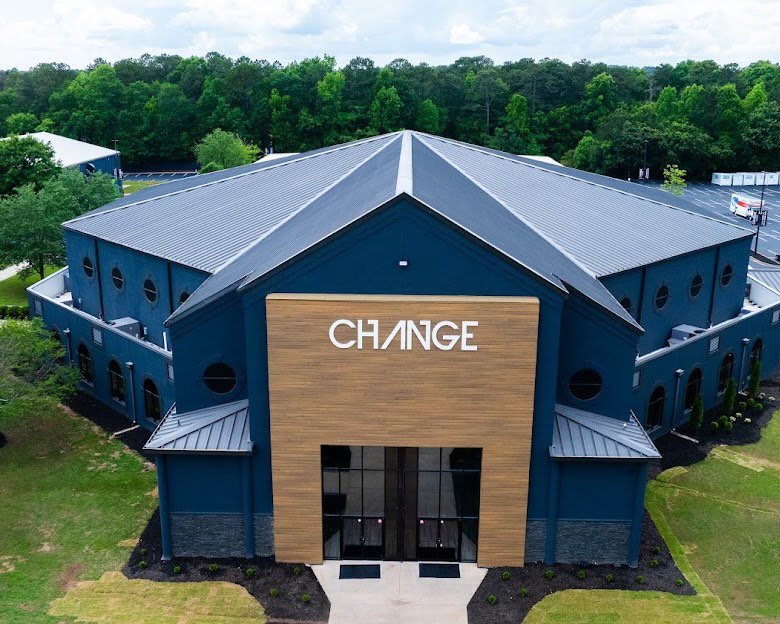
Lead Pastors Dharius and Shameka Daniels planted Change Church with locations in Georgia, New Jersey, and a substantial online presence. The ministry's organizing philosophy is embedded in its name: the church exists to facilitate genuine transformation in people, and every structural decision is evaluated against that purpose.
Change Church is often described in terms of its production quality and cultural fluency — and both are genuinely excellent. But reducing the ministry to its aesthetic is a mistake. The aesthetic serves a theological commitment: that the gospel is worth presenting with excellence, and that reaching people where they are requires meeting them in the cultural register they actually inhabit.
The next step is visible
One of Change Church's most instructive structural commitments is clarity about next steps. At every point of entry — first-time visit, salvation moment, small group inquiry — there is a clear, accessible, and visible next step available. The church has designed its pathway so that someone who wants to go deeper never has to wonder what that means in practical terms.
Accessibility is part of hospitality
Change Church's multi-site and online model is not primarily a growth strategy, though it produces growth. It is a hospitality strategy. The conviction is that geography should not be a barrier to transformation — that someone in a rural community with no physical access to a healthy church deserves the same quality of pastoral care and theological formation as someone who lives ten minutes from the building.
What other churches can learn from Change Church
Every church has an implicit pathway — the way people actually move from visitor to disciple to leader. Change Church's lesson is that implicit pathways serve the church, not the person. Making pathways explicit, visible, and simple is one of the highest-leverage structural investments a congregation can make.
Four Churches, Four Different Strengths
What these congregations share is not a model — it is a posture. Each is led by people who have asked, with genuine seriousness, what faithfulness requires in their specific context, and then built structures to deliver on that answer. They have refused the shortcuts: the event-driven ministry that substitutes for formation, the personality-driven church that cannot survive the founder's departure, the digital presence that broadcasts but does not disciple.
Their differences are instructive precisely because they are real. 2819 Church has prioritized digital missional clarity. New Life Covenant has prioritized whole-life balanced ministry. Wheeler Avenue has demonstrated how a founding vision becomes a lasting institution. Change Church has shown how transformation pathways can be made visible and accessible at scale. None of them is doing what the other does. All of them are doing what they set out to do.
Sermoni helps pastors and ministry teams develop their messages with greater depth, organize sermon series into coherent formation pathways, and give their congregations more than a weekly experience — a way to keep growing between Sundays.
The Healthy-Church Scorecard
Use the following questions to evaluate your congregation honestly across the six dimensions that distinguished these four churches. There are no scores — only a clearer picture of where your ministry is strong and where the work remains.
Mission
- Can every leader on your team state your church's mission without looking it up?
- Does your calendar reflect your stated mission, or does it reflect accumulated programs?
- Would a first-time visitor be able to identify what your church uniquely exists to do?
Discipleship
- Does your church have a defined process for moving people from attending to growing?
- Can you describe the next step available to every person at every level of engagement?
- Are the people who have been attending your church for five years measurably different because of that involvement?
Community
- Can you name specific, sustained ways your church is serving the neighborhood or population it was called to reach?
- Are community partnerships strategic and ongoing, or occasional and event-based?
- Does your church measure its impact on the community, or only its internal activity?
Care
- Does your congregation have systems in place to identify and respond to members in crisis?
- Are there people in your church who have been in pain for months without anyone in pastoral leadership knowing?
- Does your care ministry scale with your congregation, or does it depend entirely on the senior pastor's personal bandwidth?
Leadership
- Does your leadership team have clarity about who is responsible for what?
- Is there a succession plan in place — not for an emergency, but as a normal organizational discipline?
- Are you developing leaders who could carry the mission forward without you, or leaders who depend on your presence to function?
Measurement
- What does your church currently measure, and what do those metrics actually tell you about transformation?
- Are there outcomes you care about that you currently have no way of measuring?
- If your church is healthy by its own measures but declining by external ones, which set of measures is more honest?
Great Churches Make Their Theology Visible
The deepest lesson across these four congregations is not structural. It is theological. Each of them has a theology large enough to generate a ministry comprehensive enough to address the people it serves. The programs are downstream of the convictions. The structures serve the beliefs.
A church that wants to be healthy in the way these churches are healthy must begin with the same question they began with: what does the gospel actually require of us, for these people, in this place, at this moment? Everything else — the worship style, the multi-site strategy, the digital presence, the community partnerships — is the answer to that question, not the question itself.
"And let us consider how we may spur one another on toward love and good deeds, not giving up meeting together, as some are in the habit of doing, but encouraging one another — and all the more as you see the Day approaching."Hebrews 10:24–25
Key Takeaways
- Healthy ministry cannot be reduced to a single model — the four churches in this piece demonstrate that faithfulness takes genuinely different forms in different contexts.
- 2819 Church demonstrates that digital presence can be a full discipleship environment, not just a broadcast channel, when it is architecturally designed for formation.
- New Life Covenant demonstrates that balanced ministry — serving the whole person across the full week — requires intentional structural investment, not occasional programming.
- Wheeler Avenue demonstrates that institutional longevity is possible when a founding theology is large enough to contain multiple generations and pastoral transitions.
- Change Church demonstrates that making transformation pathways visible and accessible is itself a form of pastoral care.
- The six-dimension framework — mission, discipleship, community, care, leadership, measurement — provides an honest diagnostic for any congregation willing to apply it.
- Great churches make their theology visible through structures, programs, and systems that can be observed, evaluated, and — where transferable — learned from.
Questions for Reflection
- Which of the four models — missional clarity, balanced ministry, institutional longevity, or transformation pathways — most closely describes what your church does well? Which is furthest from your current reality?
- If a leadership columnist evaluated your congregation using the six dimensions in this article, what would they write?
- What is the one structural investment — a defined discipleship pathway, a succession plan, a community partnership, a measurement system — that would most improve your church's health in the next twelve months?
- Is your church's digital presence designed for broadcast or for formation? What would need to change to close that gap?
- Can every leader in your organization state your mission clearly, and does your calendar reflect it? If not, which is more honest — the stated mission or the calendar?
- What would it mean for your theology to be more visible in your organizational structure? What programs, systems, or partnerships are currently missing that would make your beliefs more legible to the community you serve?
Christianpreneur Magazine may earn a commission from qualifying purchases made through Amazon affiliate links at no additional cost to the reader.
More in Church Leaders
See all
Pastor of the Month: Rich Villodas of New Life Fellowship
The Brooklyn-born lead pastor of New Life Fellowship is helping churches rediscover a slower, deeper, more emotionally healthy way to follow Jesus.
Marcus Reed · 7 min
Three Church Leaders to Watch in 2026: Dharius Daniels, Corey Brooks and Philip Anthony Mitchell
Pastor Dharius Daniels, Pastor Corey Brooks and Philip Anthony Mitchell are leading in three very different ways, but each is forcing the church to think more seriously about transformation, community impact and discipleship.
Christianpreneur Staff · 14 min
This Church Helped Cancel $35M in Medical Debt
Transformation Church in South Carolina helped erase $34.9 million in medical debt for more than 17,500 people across the Carolinas. The story is a powerful example of what can happen when generosity, strategy and community partnership work together.
Rachel Thompson · 4 min